
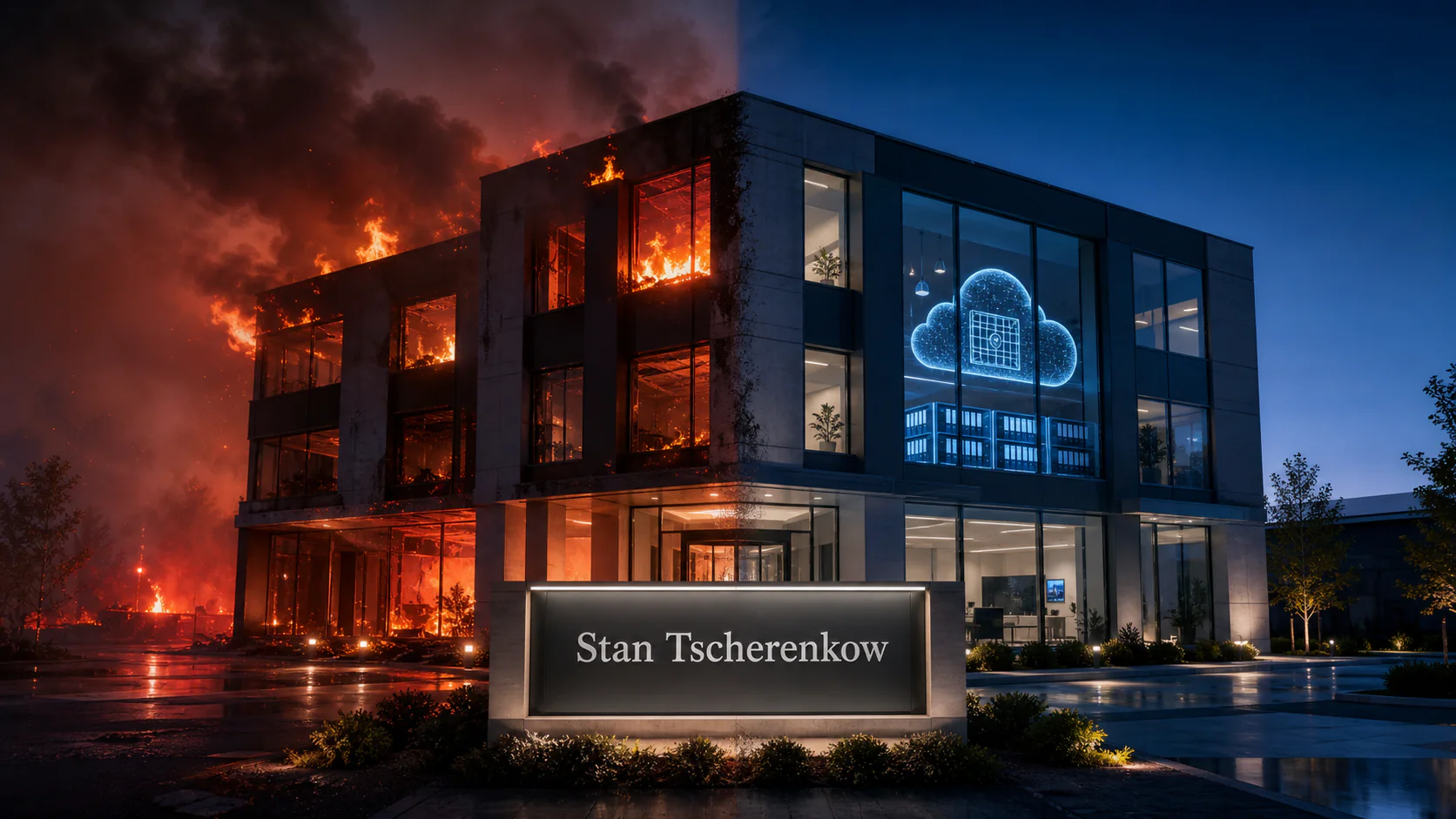
Imagine the call comes at 8:14.
The building will not open tomorrow.
Maybe it is fire. Maybe water. Maybe an evacuation order, structural damage, a broken lease, or one of those events people call unlikely until the phone rings.
Nobody can walk back in and retrieve the thing they suddenly remember they need.
Now the business gets tested.
Not the motivational version.
The actual one.
What is the durable business lesson?
A company is not prepared because it saved copies. It is prepared when the right people can restore identity, authority, access, commitments, and the next critical operation after the normal route disappears.
Where are the formation documents?
Who has the insurance policy number?
Can payroll run if the person who always runs it cannot reach the office?
Which bank signer can move money?
Where are the client commitments that lived in somebody's notebook?
Who sends the first message to employees?
Who can recover the password manager if the owner's phone is unavailable?
A backup answers whether a copy exists. Recovery answers whether the right person can use it tomorrow.
The usual answer is comforting.
"Everything is backed up."
Beautiful.
Can you restore it tomorrow?
That is a different question.
Old story
We protected the important things because everything is in one safe place.
Real mechanism
One physical event can remove the originals, copies, access device, and the person who knows the route.
The building was carrying more than furniture
A company can lose its headquarters and continue.
It can lose equipment and replace it.
It can even lose inventory and survive the cost.
What it cannot survive cleanly is discovering that the building was also carrying the company's memory, identity, authority, and recovery instructions.
One filing cabinet held the originals.
One laptop held the customer records.
One phone received every verification code.
One person knew what had to happen first.
Very efficient.
Right until all four are unavailable together.
THE VERY SERIOUS TRANSLATION
Official version
Everything is backed up.
Translation
The copies may disappear with the original, and one unavailable person still owns the restore button.
What must survive somewhere else
The goal is not to build a bunker.
The goal is to prove who the company is, access what it owns, communicate with the right people, and continue the next critical operation without entering the building.
Identity
Can the authorized person retrieve formation, license, insurance, lease, tax, and banking records?
Authority
Can a named backup move payroll, approve a client message, and make the next bounded decision?
Recovery
Can the team restore one real file, recover access, and see current commitments?
Run this without entering the office.
- Identity and authorityLocate formation documents, licenses, insurance, leases, tax identifiers, banking contacts, and signing authority.
- Money movementShow how payroll, deposits, invoices, taxes, and critical vendor payments continue. Name the authorized backup.
- Client commitmentsRetrieve active contracts, deadlines, delivery status, open promises, and the next action for material clients.
- Access recoveryRecover the password manager and backup codes without depending on the device they restore. Do not expose passwords in the recovery map.
- People and decisionsUse a current contact tree. Name who communicates first and who can make bounded emergency decisions.
- Copies outside the eventKeep recoverable records across more than one medium, including a protected off-site copy.
- One real restoreRestore a real file. The first failed retrieval is the work.
The one-page recovery map
Create one page that answers:
What must continue in the first 24 hours?
Who owns each decision?
Where does the recoverable source live?
What is stored off-site?
Which originals are deliberately separated?
Who is the backup signer or operator?
How is access recovered without exposing credentials?
When was the last restore test completed?
That page is not the full emergency plan.
It is the route into it.
Preparedness means continuity and tested recovery.
Ready.gov says business emergency planning should include communications, continuity, and technology recovery. The U.S. Small Business Administration advises identifying critical functions, organizing a continuity team, and evaluating recovery strategies. CISA recommends offline encrypted backups and regular tests of backup availability and integrity. These sources support the continuity and restore principles. They do not replace business-specific legal, insurance, security, or records advice.
Retrieval discipline
Build a filing system that returns the right source before the decision expires.
The owner was the operating system
Check what happens when authority, memory, and exceptions still live in one person.
The building is allowed to hold the business. It is not allowed to be the only place where the business exists.