
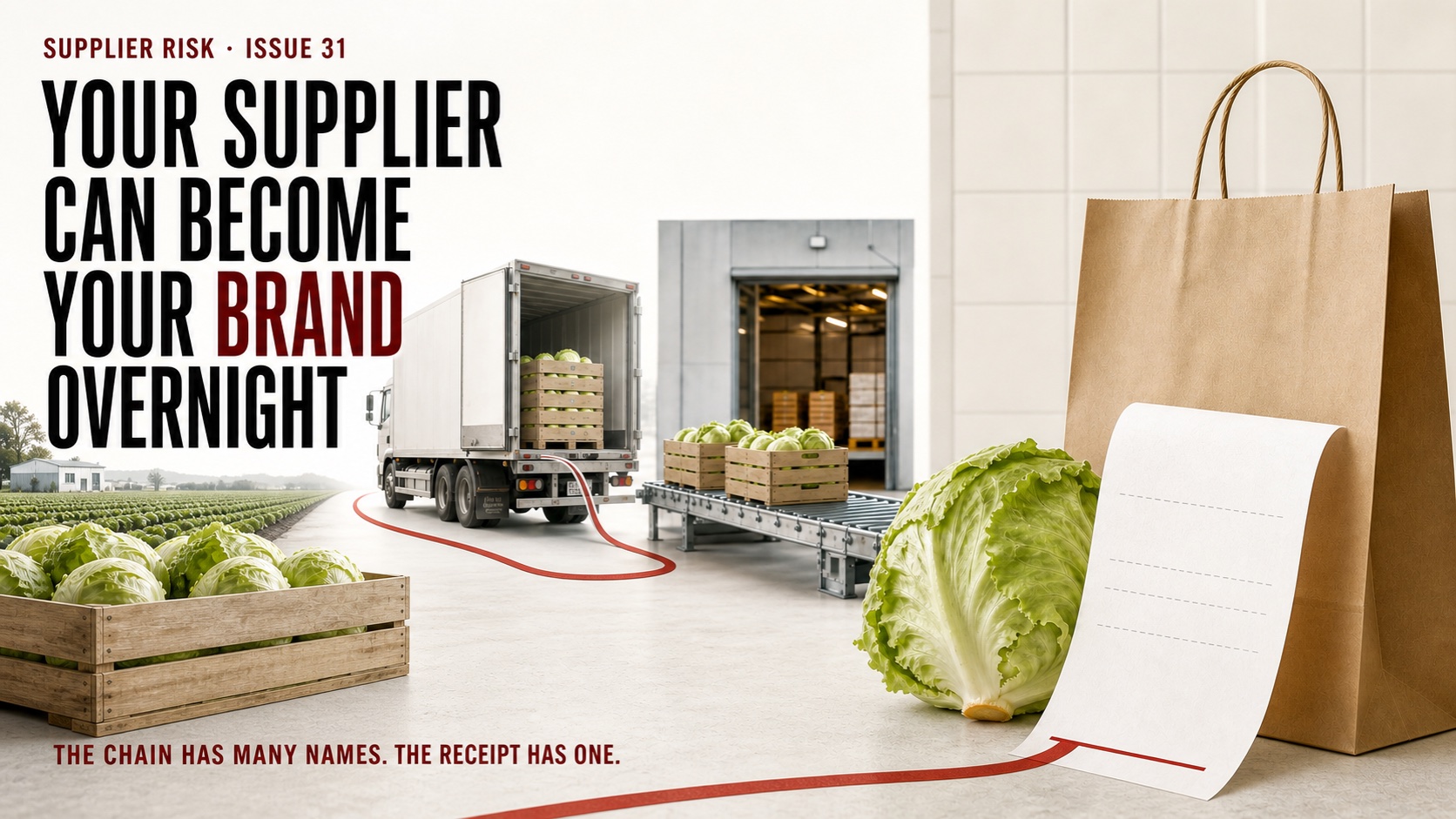
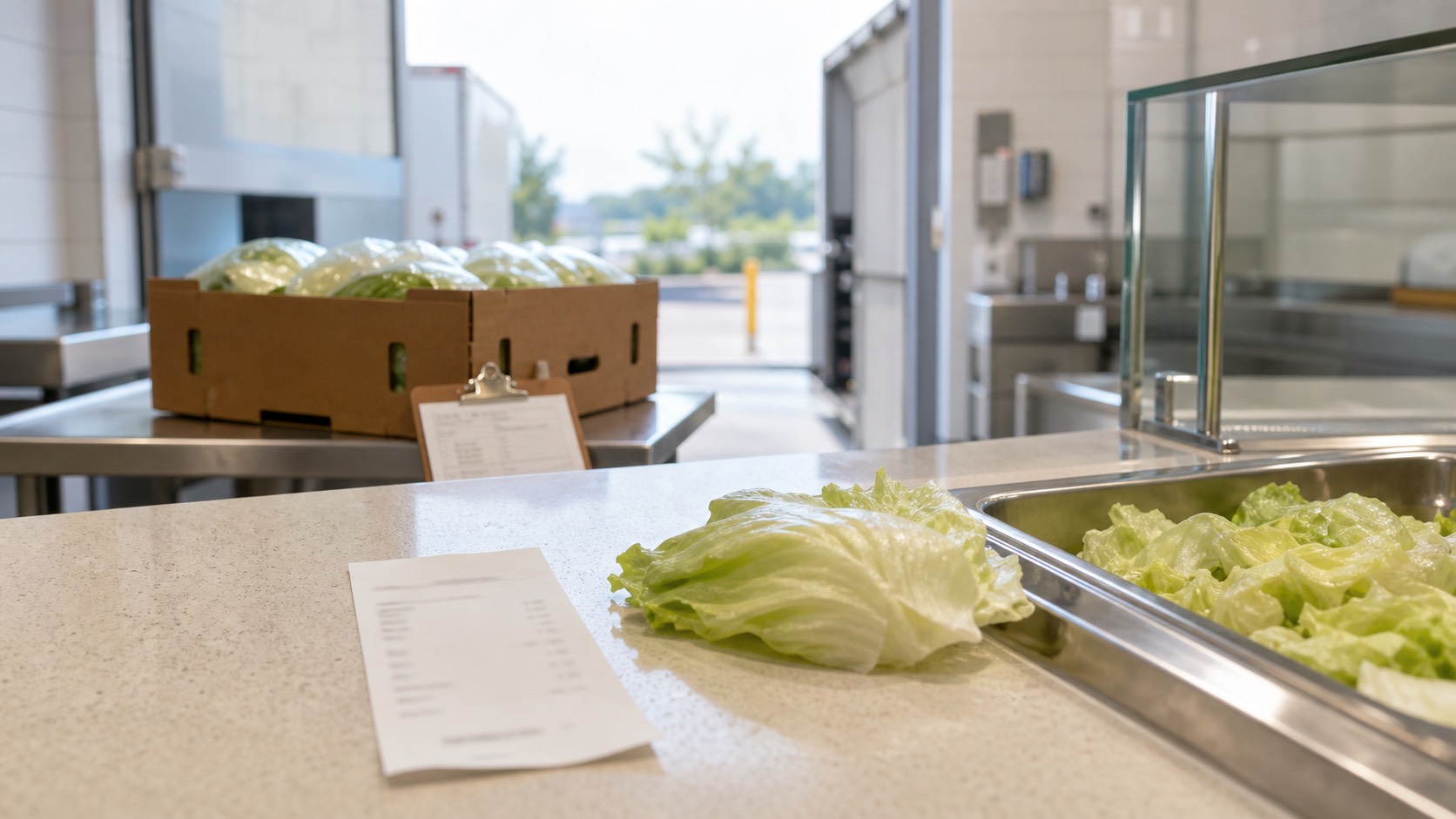
One ingredient crossed a farm, a supplier relationship, a distribution chain, and a restaurant counter.
The customer saw lunch.
On July 17, 2026, the FDA said its traceback investigation had converged on Taylor Farms de Mexico as the supplier of shredded iceberg lettuce used by Taco Bell locations where people ate before becoming ill.
The FDA reported 1,644 illnesses in the five-state outbreak subset, 94 hospitalizations, and no deaths. The investigation remains open. Additional brands, restaurants, retailers, or distribution channels may still be identified.
Taco Bell says it completed removal of the affected lettuce from its restaurants and removed the ingredient from its supply chain nationwide on July 17.
What is the business lesson?
A company can outsource an ingredient, a contractor, a system, a vendor, or a production step. It cannot outsource what the customer associates with its name. Supplier responsibility belongs in the contract. Customer responsibility arrives at the promise.
The org chart can place the farm, supplier, distributor, franchise, and restaurant in five separate boxes.
Very tidy.
Very official.
The customer does not carry your org chart to the counter.
The customer sees the sign, places the order, pays the bill, and remembers the name closest to the experience.
You can outsource the work. You cannot outsource the consequence the customer attaches to your name.
Official story
Supplier risk belongs to procurement and the vendor contract.
Real mechanism
Supplier risk becomes brand risk when the vendor touches the customer promise.
THE VERY SERIOUS TRANSLATION
Official version
The ingredient came from an outside supplier.
Translation
The supply chain had several names. The receipt had one.
No part of this requires pretending a restaurant grew the lettuce or caused the contamination.
The Associated Press cited Michigan health officials saying there was no evidence the outbreak was related to poor handling or preparation at any single restaurant or fast-food chain.
The contamination question and the brand question are different. They do not move at the same speed.
Investigators can take weeks to map the chain. Customer association takes one headline.
Taco Bell moved quickly and says it removed the affected lettuce nationwide. Good. Speed matters when another company's input can reach your customer under your name.
Supplier risk becomes brand risk at the customer promise.
Every owner has a version of the lettuce.
It may be software that handles customer data.
A contractor who enters the customer's building.
A manufacturer that puts your label on the box.
A payroll provider, shipping partner, cloud platform, bookkeeper, or outsourced sales team.
Something outside your company is already carrying your name into the customer's hands.
Can you find the affected input?
Trace the supplier, batch, customer, location, and date without rebuilding the chain by phone.
Who can halt delivery?
Name the person who can stop a sale while the facts are incomplete. Waiting for the owner is not a control.
Has the backup been tested?
A second supplier in a spreadsheet is comfort. A tested second supplier is capacity.
What does the customer hear?
Decide who speaks, what is confirmed, what changed, and where the next update will appear.
What changes after the incident?
Update the vendor standard, stop authority, trace record, customer message, and backup test.
Look at the chain before the emergency makes everyone suddenly interested in the chain.
Which outside input can stop delivery or damage the customer experience?
Which vendor could force you to explain your business before you have all the facts?
Start there.
Small-business supply-chain problems
Check where outside dependencies are already creating delivery, margin, and customer risk.
Owner guideHandle supplier risk before the emergency
Use a practical owner-level route for traceability, authority, communication, and backup capacity.
Capacity decisionKnow when to add a second supplier
Separate a comforting vendor list from a backup that can actually carry the work.
The customer never sees your vendor map. The customer sees your name.