Manual 11 · Founder-level legal reviewing
Counsel is paid by the hour. Most of the cost is paid because the founder did not know which questions to bring. This manual is the self-audit you run quarterly, the question stack to put to your lawyer, and the line where this page hands you off to actual legal advice.
Open the audit When the lawyer is the right call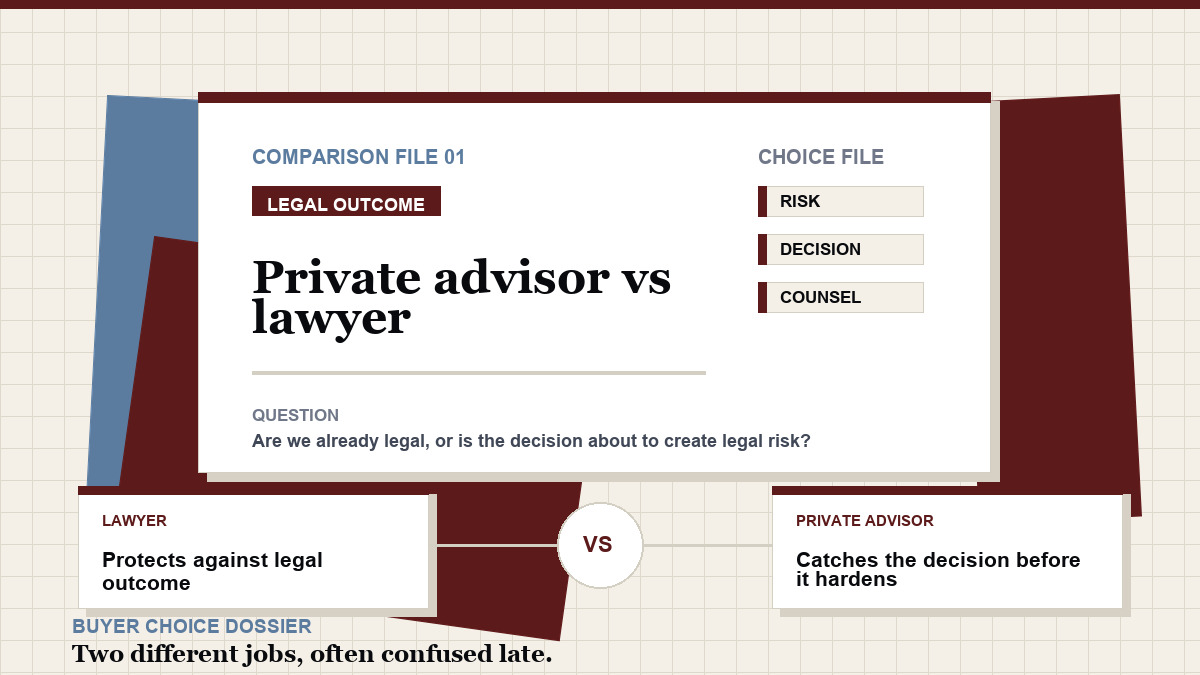
What this work actually is
Founder-level legal reviewing is the quarterly discipline of mapping the standing legal exposure of the business: contracts, IP, employment, regulatory, founder personal liability, and litigation surface. It is literacy, not opinion. It does not make you a lawyer; it makes you a sharper client.
The output is one page that feeds the next conversation with counsel. Counsel reviews the page, identifies the live questions, and bills time on what actually needs the legal opinion, not on getting briefed into your situation.
Most founders treat counsel as a 911 call. A contract arrives, a dispute starts, a regulator writes; counsel is engaged in the moment. The cost of that pattern is not the legal fee; it is the emergency founder calls, the structural decisions taken without legal framing, the contracts signed in ignorance of the standard playbook.
The quarterly review changes the timing. The map is built when nothing is on fire, the question stack is ready when something starts, and counsel walks into a conversation that already has the documents and the question under consideration.
What you need before you start
01 · A retained lawyer
Hourly arrangement is fine; retainer is better. The point is that someone has the file. The audit is what you bring to them.
02 · A document inventory
Customer agreements, vendor agreements, employment agreements, NDAs, IP assignments, leases, loans, licenses, regulatory filings. If they are spread across folders and inboxes, the inventory is the first piece of work.
03 · A standing meeting
Calendar block. Not "we will reach out when something comes up." The standing meeting is what makes the audit useful.
04 · A privilege rule
Communications with counsel that are kept privileged need to be addressed correctly and not forwarded outside the privilege chain. Review the basics with your lawyer once. The mistake costs the privilege exactly when you need it.
The quarterly self-audit
List the top ten of each. For each, note the term length, the auto-renewal terms, the termination rights, the liability cap, the indemnification scope, and any unusual clause. Mark anything that is non-standard, missing, or out-of-date for review.
List every active employee and active contractor. For each, confirm the agreement is signed, the IP assignment is in place, the non-compete or non-solicit is enforceable in your jurisdiction, and any equity grant matches the ownership split. Most founders find at least one missing IP assignment per audit cycle.
Trademarks (registered, in process, lapsed). Patents (granted, filed, in development). Copyright assignments on key creative work. Trade secret protections (which documents, which controls). Domains. Brand. The IP map is the asset map; without it the M&A diligence later is a months-long surprise.
Industry regulators, data protection (GDPR, CCPA, similar), tax registrations, employment compliance, cross-border filings. Map current filings and current obligations. The regulatory layer changes; the audit is when you check whether your filings still match the law.
Personal guarantees you have signed. D&O insurance status. Indemnification agreements with the company. Personal exposure on tax filings, transfer pricing arrangements, family-office overlap. Exposure that runs through your name personally is the most invisible category and the most consequential.
Open disputes (customer, vendor, employment, regulatory). Demand letters in the last twelve months. Threats made informally that did not result in letters. Settlements signed and any ongoing obligations they create. The litigation surface is what counsel walks into on day one of any new dispute.
How to know the audit is failing
The audit is running but counsel still arrives surprised.
The map is being kept by you and not being shared. Send the audit summary to counsel before each quarterly meeting. Their being surprised is the audit's whole purpose to prevent.
A contract was signed in the last quarter without legal review.
There is no signing threshold. Set one in the audit (e.g., over $X, multi-year, IP-touching) and route every contract above the threshold to counsel before signature.
A demand letter sat for more than seven days before counsel saw it.
The intake process is broken. Demand letters are time-sensitive; the response window is rarely longer than thirty days. Build the routing rule and test it.
An IP assignment is missing on a contractor whose work is in the product.
Common, fixable, expensive at exit. Get the assignment now, even if late; the cost of cleaning it up later is multiples of the cost of asking.
You started forwarding privileged communications to non-lawyers on the team.
Privilege has been broken. Talk to counsel about how to restore the privilege boundary and what was waived.
A new jurisdiction was added without a registration check.
Common when sales adds a new country or state. Add the new-jurisdiction check to the audit cadence; the audit catches what the operating week does not.
Tools and tactics
The map is the work. The brain is what makes the map current instead of historical.
One folder. Document inventory at the top. Six layer files: contracts, employment, IP, regulatory, personal liability, litigation. Each updated quarterly with the audit. Question stack for counsel kept current. Privilege boundary documented.
Documented in full inside the engagement · teaser here
One rule, written, applied without exception: contracts over a stated value, multi-year, or IP-touching go to counsel before signature. The threshold is the founder's protection against signing under pressure.
Any letter that uses the word "demand," "claim," "notice," "breach," or comes from a law firm goes to counsel within twenty-four hours. The rule lives at every inbox that receives external mail; assistant, legal counsel, and finance are briefed.
One page. Who is inside the privilege chain. What gets addressed correctly. What never goes in writing outside privilege. Review once with counsel; refreshed annually. The boundary is what makes communications protectable when they need to be.
What this work is not
The audit is the founder's review of the map. Calls on the map belong to a licensed lawyer in your jurisdiction. The comparison page sets the structural difference between protecting the company from outcomes and reviewing the decision before the outcome forms.
Review advisor vs. lawyer →When the legal question is also a structural one
Stan reviews each request for fit. All corporate work starts with an inquiry and is quoted separately. Stan confirms the people, stakes, scope, and fee in writing before work starts.
Apply for business coachingWork with me · $1,500/month 1:1 business work · Request scope
