Manual 10 · Owner-held function for one quarter
Sometimes the function is between leaders. Sometimes the founder needs to feel the seat themselves before they hire it. This manual is the ninety-day playbook for running a function as the owner: the brief, the operating cadence, the artifacts you ship, and the handover that makes the eventual hire viable.
Open the playbook When the interim is the right call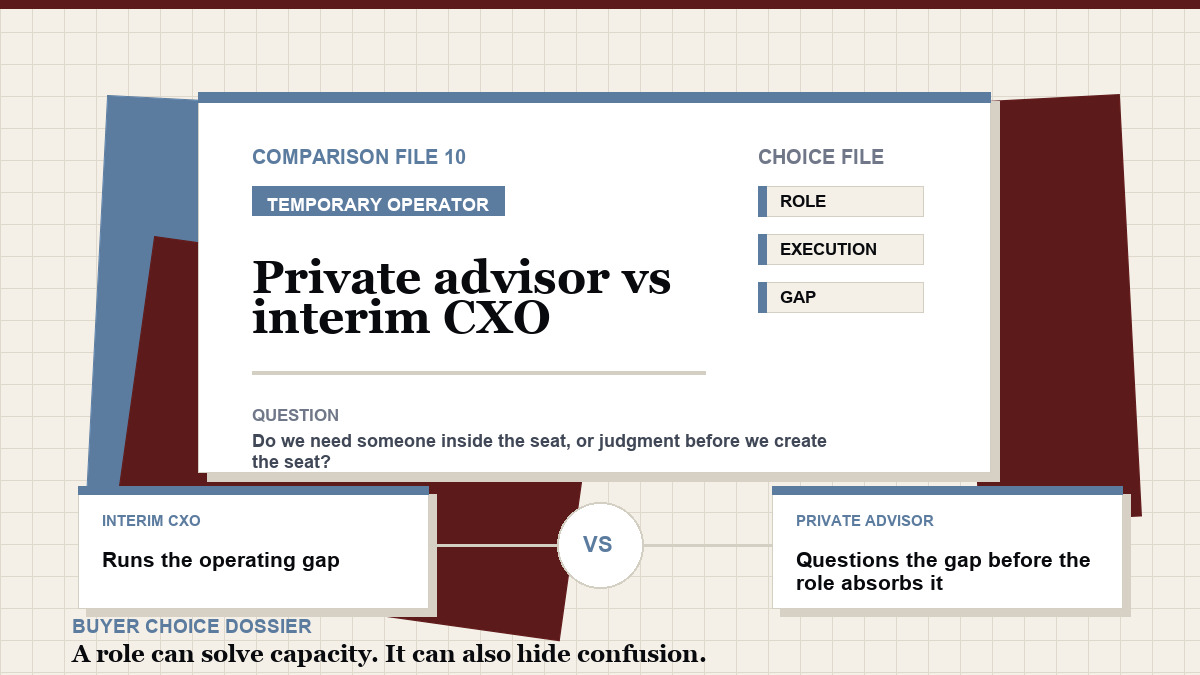
What this work actually is
Owner-held function is a structured, time-boxed period in which the founder runs a single function with full responsibility, ships the artifacts that role would ship, and hands the seat over to a real hire or an interim with a clean brief.
The point is not to save the salary. The point is to learn the shape of the work, build the artifacts the next person will inherit, and surface what the function actually needs at this stage of the company.
The failure mode is the absence of the time box. A founder who slides into running sales because "the head of sales just left" is six months from being the head of sales. The work absorbs them, the rest of the company drifts, and the eventual hire arrives into an unclear seat.
The structured ninety days fixes that. The brief names what is being held, why, for how long, and what the handover looks like. The cadence makes the work visible. The artifacts make the seat hireable.
What you need before you start
01 · A signed end date
Without an end date, the seat becomes permanent by default. Write the date in the brief, put it on the calendar, mention it in the team announcement.
02 · A vacated existing role
You cannot hold the new function and the CEO seat at full intensity. Name what is being descoped, who is taking it, and for how long. The descope is part of the brief.
03 · A search running in parallel
The ninety days are also the runway for filling the seat properly. Day 90 should land on a candidate accepted or an interim engaged, not on the first day of the search.
04 · A weekly artifact discipline
If the function ships a weekly forecast, you ship a weekly forecast. If it ships a monthly close, you ship a monthly close. The artifacts are how the seat learns.
The full ninety-day playbook
One page. Function being held, why, end date, what is descoped, what the team should bring to you, what they should bring to others. Sent to the team and the board on day one. The brief is what makes the time-box real.
Three weeks. Review every artifact the function has produced for the last twelve months. One-on-one with each team member. List the standing meetings the function holds and attend them. Output: a one-page business review that says what the function is for, what it does well, where it is broken, and what the next leader has to fix.
Nine weeks. Hold the cadence. Ship the artifacts. Make the calls the role makes. Document every decision in the function's decision log. Resist the temptation to launch a re-org or a new strategy; you are not the permanent leader, and the next one needs the seat usable.
Search runs throughout. Brief is the candidate-facing version of the function brief. Interview slate is yours. By day 75 the candidate is selected or the interim is signed. The countdown forces the search to be real.
Ten pages or fewer. State of the function as you hand it over. Open decisions and your review on each. The team, by name, with what they need from the next leader. The artifacts that exist and the artifacts that need to be built. The rough plan you would run if you were staying.
Joint announcement to the team. Two-week overlap if possible, then a clean step-out. You return to the CEO seat. Your name comes off the function's standing meetings. You are reachable; you are not running it. The hardest step in the playbook.
How to know the ninety-day box is breaking
The end date has already moved once.
It is allowed once, with a written reason and a new fixed date. A second move means the search is not real.
The CEO descope is being silently undone.
You are doing both jobs at half-speed. Neither will hold. Re-establish the descope or shorten the function box.
You launched a re-org or a new strategy in week six.
You have started behaving like the permanent leader. Pause the change. The next leader needs the seat as it is, not as you reshaped it for yourself.
The search is on the same five candidates it was on in week four.
The search is stalled, often because the brief is unclear or the bar is wrong. Recalibrate the brief and add three new candidates a week.
Artifacts have started slipping.
The function is producing less than it was. You are at capacity. Either the box ends earlier or an interim arrives sooner.
You have stopped attending the executive meetings as CEO.
The team now sees you as the function lead. Restore your CEO presence on day 60 at the latest, even if the function still needs you.
Tools and tactics
The brain is what makes the ninety days transferable instead of a black box.
One folder per held function. Brief at the top. Business review from the review-in. Decision log inline. Weekly artifact archive. Search tracker. Handover document. The folder becomes the onboarding kit for the next leader.
Documented in full inside the engagement · teaser here
One paragraph naming what you are not doing for ninety days and who is taking each piece. Sent to the team and the board with the brief. Without it, the descope is a private intention; with it, others hold you accountable.
The function brief, rewritten as a job. What the role is for, what the next leader inherits, what the first ninety days looks like, what the founder's relationship to the seat will be. Sent with every interview invite. Cuts the bad-fit conversations early.
Two weeks where the new leader is in the seat and you are reachable. Standing meetings transitioned, decisions handed over, calendar items reassigned. The overlap is the difference between a clean transition and a six-month founder shadow.
What this work is not
If the function needs more than a quarter of senior attention, an interim CXO or a permanent hire is the right move. The comparison page sets the structural difference between the seat and the review across from it.
Review advisor vs. interim CXO →When the founder hold is also the wrong instrument
Stan reviews each request for fit. All corporate work starts with an inquiry and is quoted separately. Stan confirms the people, stakes, scope, and fee in writing before work starts.
Apply for business coachingWork with me · $1,500/month 1:1 business work · Request scope
