
The founder signs control away quietly
The dilution number gets the attention. The consent schedule gets treated as paperwork. Eight months later, the founder learns three normal operating decisions now need outside approval.
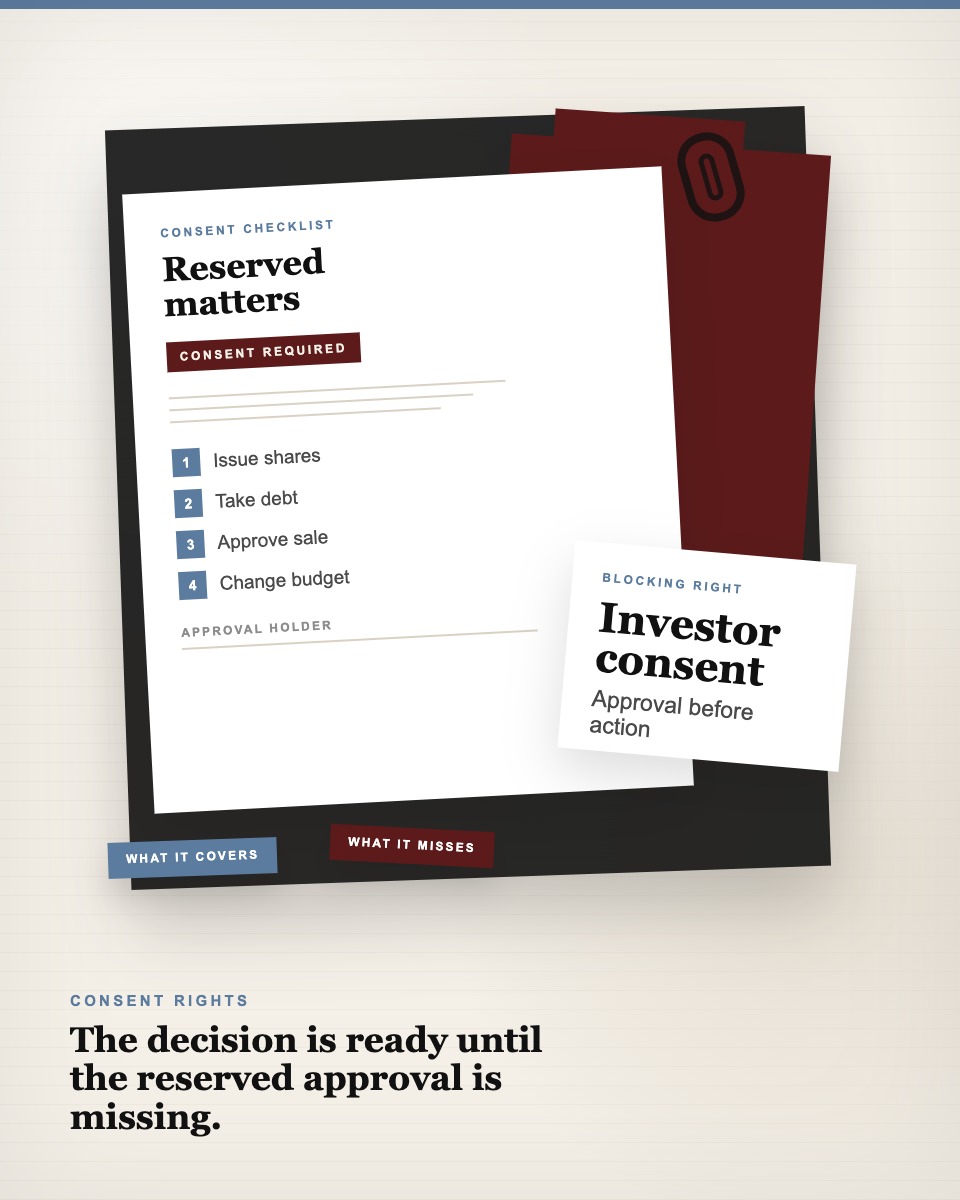
Consent rights give specific shareholders approval power over decisions the company cannot make alone.
Plain definition
Consent rights usually appear in shareholder agreements, investment documents, and board packages. They say that certain decisions need approval before management can act.
They often cover issuing new shares, taking on debt, selling major assets, hiring or firing senior executives, changing budgets, approving acquisitions, or selling the company. The list matters because every item on it moves a decision from operating authority into shared control.
Consent rights are not just protection for investors. They are a map of where founder authority has been limited.
What goes wrong
The dilution number gets the attention. The consent schedule gets treated as paperwork. Eight months later, the founder learns three normal operating decisions now need outside approval.
The investor did not ask to run the company. The documents put them into the decision path often enough that management starts waiting before moving.
The agreement protects the obvious financial decisions but misses the decisions that actually change control: senior hires, budget thresholds, new markets, related-party transactions.
A consent right meant for protection becomes bargaining power when the company needs speed. The cost is paid in timing, terms, and confidence.
Business owner questions
In practice
Decision rights explain which decisions remain with management and which ones move to shareholders or the board.
Related structure Drag Along RightsDrag-along rights sit near consent rights in many transaction documents because both affect control at the sale moment.
Related structure Capital Raise That Cost ControlThe Capital Raise That Cost Control shows how founder-friendly language can hide future consent limits.
Related pages
A case note on how one raise changed control months after signing.
Related pagesThe conditions that make outside capital worth the control tradeoff.
Related pagesThe related question of when governance rights become operating pressure.
Use the definition to understand the mechanism. If the issue is now affecting ownership, authority, timing, or trust, treat it as a business decision before choosing the next document.
Work with Stan
Start with Work with me for monthly 1:1 business work, or request scope when the issue involves board, ownership, partner, leadership, or larger collaboration.