
When Hiring a Senior Executive Backfires: A Case Note
Open with the case. The structural shape of a backfire is rarely the candidate. The shape is what the role was being asked to absorb that nobody named in the search.
Five pieces on the structural shape of a backfire, what character due diligence missed, the fire-or-not decision, and rebuilding authority afterward.
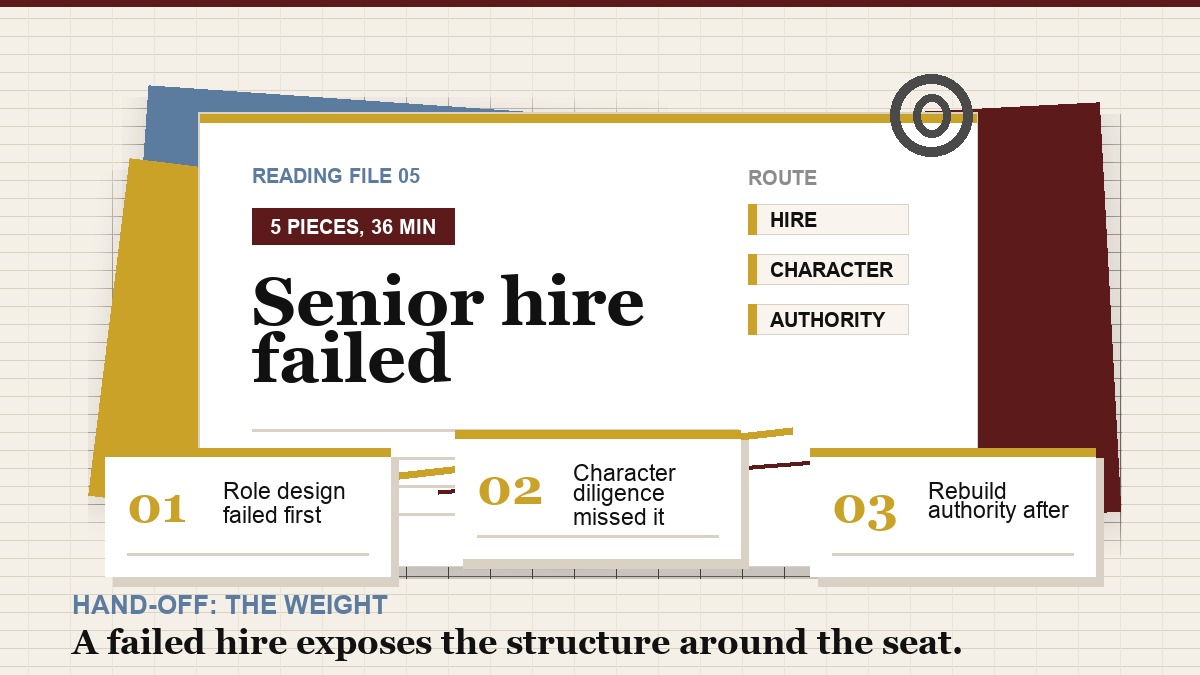
Each piece sharpens the same pressure from a different angle. The bridges tell you why the next piece belongs here and where the full path opens after the sequence.
A senior hire that fails is rarely a hiring mistake in the way the operator initially reviews it. It is usually a structural mistake about what the seat needed, what the founder was actually willing to delegate, and what the candidate signalled in the diligence that the operator chose to review past. The sequence walks the case, the diligence layer that gets skipped most often, the cleanest version of the fire-or-not decision, what waiting too long looks like, and the rebuild of authority after the seat is empty again.
Open with the case. The structural shape of a backfire is rarely the candidate. The shape is what the role was being asked to absorb that nobody named in the search.
The case shows the shape. This essay names what diligence missed. Financial due diligence is the easy part. Character due diligence is harder, less systematic, and the reason most senior hires that fail were predictable.
Diligence is now retrospective. The live decision is whether to remove. This guide is the cleanest version of that decision, separated from the noise of how-do-I-tell-the-team.
And here is the case note for what waiting actually costs. This is the case note on a CEO who knew the answer, held it for two extra quarters, and what the team learned during those quarters.
Closing piece. Once the seat is empty again, the rebuild question is structural, not personal. This guide is how authority is rebuilt without the founder collapsing back into every decision.
A failed senior hire is not the cost. The cost is the time during which the team was watching the operator decide whether to act. Senior people review that interval as a signal about senior judgment. The metric most operators track (the cost of severance, the cost of the search) is small. The metric that matters (the trust the team places in the operator's judgment about the business) is large and not on any dashboard.
Practical checks for handing over work that still depends on the owner.
Review the path → If you want to keep reviewingOne business problem in each issue, with its cause and what to check next.
Subscribe → If you want a private reviewIndividual one-to-one business work is $1,500/month, every two weeks and month to month.
Request scope →