AI-for-X · accountants
Bookkeeping is the highest-volume, lowest-margin part of the firm. AI cuts the volume cost without removing the accountant's professional sign-off, the audit trail, or the duty to client data. This manual draws the line and gives you the second-brain stack a small firm can run inside its existing systems.
Read the scope Owner-side reviewing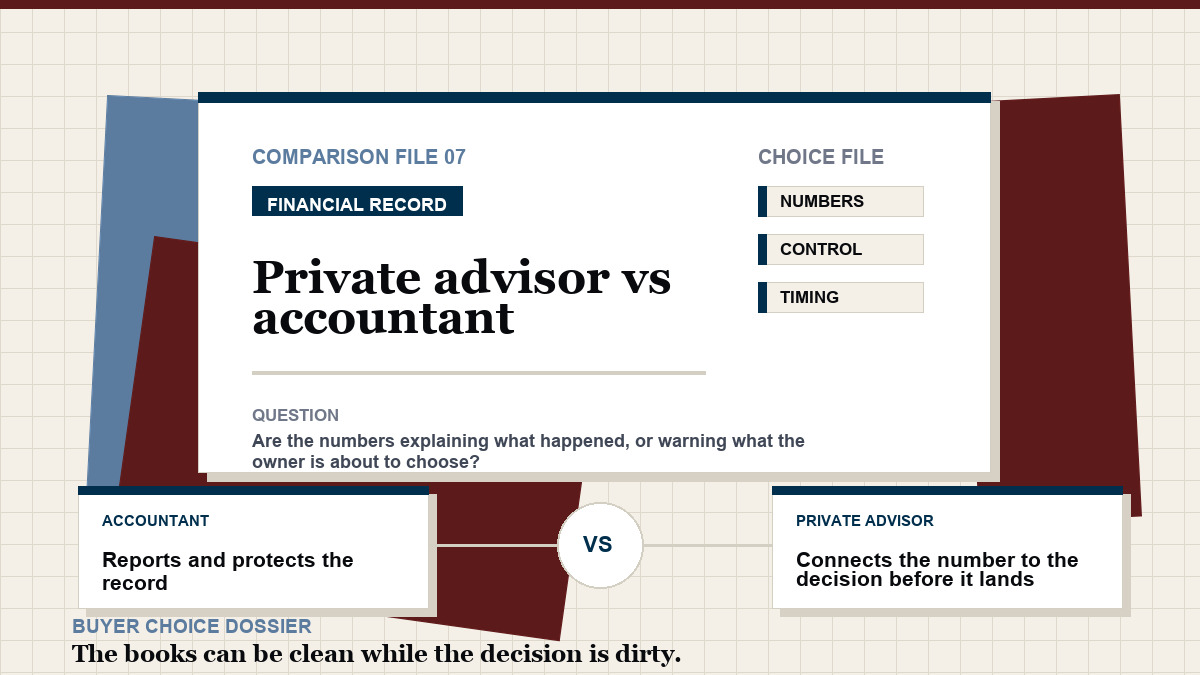
What this work actually is
AI for accountants is the deliberate use of LLMs and structured automation on transaction categorization, reconciliation prep, variance narratives, tax research, and client communication. It runs inside the firm's tenant. It does not sign returns, opinions, or assurance reports.
The hard floor is the accountant's professional sign-off and the data-handling rules of the jurisdiction. Workflows that respect both compound. Workflows that do not produce regulator letters and lost clients.
If the categorization is wrong, the books are wrong. The accountant signed. The model did not.
The scope
What changes when this is done well
What you need before you start
01 · Tenanted model with data-processing terms
Consumer chats are out for client data. Default to vendors with a data-processing addendum, no-train clauses, and the data residency your client contracts require.
02 · Written firm AI policy
Signed by every team member, refreshed annually. The policy is what supervisory duty looks like when the regulator asks.
03 · A clean firm chart of accounts
If your chart is messy, AI will codify the mess at scale. Clean the chart first; the throughput waits one extra week.
04 · A redaction discipline
Even on the tenant. Belt-and-braces. A leak from one client erodes trust across the entire book.
05 · An engagement-letter clause
Which workflows touch AI, how the firm verifies, the right to opt out. Drafted with risk counsel, versioned with the policy.
The split workflow
Human owns
Per client. The rules are firm IP. The accountant decides what each line means.
AI assists
Each transaction matched against the firm chart and prior-period precedent. Confidence flagged. Low-confidence lines routed to human review.
Human owns
The judgment calls. Whether a difference is timing, cut-off, or error. Owned by the accountant.
AI assists
Bank statements parsed, GL pulled, differences listed in priority order. The accountant walks a sorted list, not a thousand transactions.
Human owns
The reasons behind the moves. The conversations with the client. Owned by the accountant.
AI assists
Period-on-period changes, top movers, candidate explanations from the prior-period notes. The accountant verifies and edits.
Human owns
The accountant decides what to claim, what to disclose, what to defer. The signature carries the position.
AI assists
Code sections, recent guidance, candidate authorities. Every cited section opened by the accountant before reliance.
Human owns
The business is the work. AI is not in the meeting; the accountant brings the review.
AI assists
Plain-English status updates, monthly close emails, year-end reminders. Drafted from accountant notes; edited and sent by the accountant.
Human owns
The accountant's name on the return is the accountant's professional warranty. AI does not sign.
AI assists
The mechanical clean-up that staff once owned. AI populates. Senior reviews. Partner signs.
How to know AI is hurting the firm
A categorization error reached the financials and only the client noticed.
The firm review step decayed. Audit the last three closes, restore the senior-on-every-close rule, and add the failure to the prompt library.
Client tax data went into a non-tenanted model.
A regulatory exposure. Disclose to the client per local rules; review the leak; tighten the redaction macro and the team training.
A tax research draft cited a code section that does not exist.
The hallucination got past verification. Pull every reliance on that draft, repair the workpaper, name the failure in the engagement log.
A junior is shipping reconciliations without a senior review.
Supervision has slipped. Restore the senior-on-every-output rule for the next quarter.
The AI usage log has not been reviewed in six weeks.
The supervisory artifact is not being supervised. Schedule the review on the calendar; treat the log as a regulator-grade document.
A client asked whether AI touched their books and the firm could not answer cleanly.
The disclosure clause is too vague or the workflow log is missing. Fix both before the next intake.
Tools and tactics
The brain is the supervisory artifact and the audit trail. It is also what makes the workflow defensible if the regulator asks.
One folder per client. Firm chart, voice file, named brief blocks for categorization, reconciliation, variance narrative, tax research, client communication. Tickmark library reused across clients with redacted prompts. AI usage log per close cycle. Quarterly review by the supervising partner against the firm policy.
Documented in full inside the engagement · teaser here
Every AI-categorized transaction tagged with confidence. Below the threshold, routed to human. The threshold is firm policy; it tightens after every error and never relaxes silently.
One sentence in the firm policy: no tax research relies on a section the accountant has not opened in the source. Enforced as a checklist on every workpaper.
Signed with every vendor that touches client data. Reviewed annually. Filed alongside the engagement letter so the client and the firm can see the chain.
What this work is not
The throughput is on volume. The professional warranty is on the accountant's signature. The comparison page sets the structural difference between recording the past and reviewing the decision underneath.
Review advisor vs. accountant →When the firm question is the wrong question
Stan reviews each request for fit. All corporate work starts with an inquiry and is quoted separately. Stan confirms the people, stakes, scope, and fee in writing before work starts.
Apply for business coachingWork with me · $1,500/month 1:1 business work · Request scope
