AI-for-X · creators and operator-publishers
Used badly, AI turns an operator with a voice into a content account that sounds like every other content account inside three months. Used well, it triples the throughput on idea capture, repurposing, and back office while leaving the voice and the source intact. This manual is the line, the workflow, and the second-brain stack a one-person publisher can run.
Read the scope The audience-building manual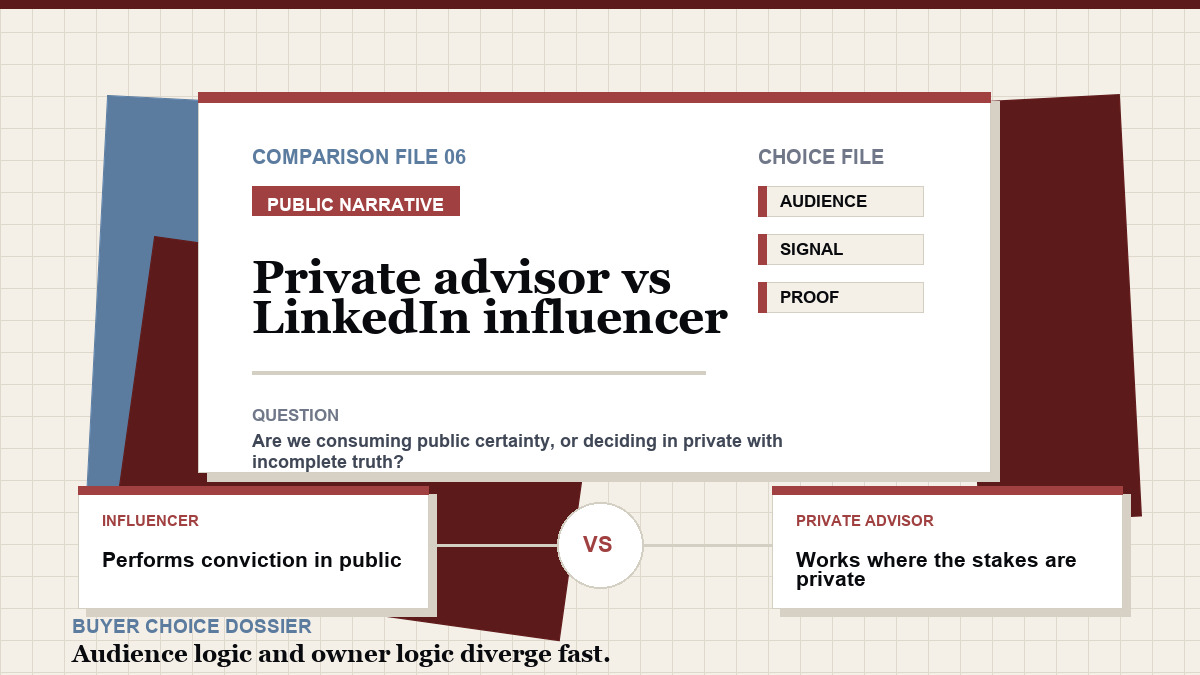
What this work actually is
AI for creators is the deliberate use of LLMs on idea capture, drafting support, repurposing across formats, scheduling, and comment triage. It does not generate the take. It does not invent the source. It does not appear under your name without the human edit pass.
The hard floor is voice integrity, source provenance, and disclosure. Workflows that respect all three compound into a recognizable body of work. Workflows that do not produce three good months and a churned audience.
The voice is the asset. Volume without voice is the failure case, not a milestone.
The scope
What changes when this is done well
What you need before you start
01 · A voice file
Three sentences you would never write. Five turns of phrase you reach for. Banned vocabulary. Refusal lines. Loaded into every drafting brief.
02 · A note-capture habit
The pieces draw from real work. Without the notes habit, AI fills the gap with plausible content and the voice file cannot save the piece.
03 · A no-fabrication rule
Quotes, statistics, anecdotes, named people. If the source cannot be named, cut it. The rule is enforced by you, on every piece, before publication.
04 · A named-source check
The check is mechanical: list the names a owner could identify, ask the question, anonymize or cut. Most relationship damage from publishing comes from skipping this.
05 · A disclosure pattern
Footer line, byline addendum, public policy page. Pick one and hold it. Audience trust survives disclosure; it does not survive being caught in something undisclosed.
The split workflow
Human owns
Real conversations, real meetings, real decisions. Your notebook or your voice memos are the source. Every piece traces back here.
AI assists
Transcribe the voice memos in your tenant. Pull the candidate themes that came up more than once. Tag them against your standing topics.
Human owns
The hardest candidate from the list. The position you are least sure of. Owned by the writer.
AI assists
From three or four lines, AI proposes a structure. You keep, reorder, or scrap. The structure is yours, the scaffolding is the assist.
Human owns
Headline, opening, the load-bearing paragraphs, the close. Always you. The voice file is the floor; you are the ceiling.
AI assists
Word count, banned vocabulary, sentence-shape tells. AI flags; you edit. The piece does not leave the voice.
Human owns
Review the piece looking for anyone identifiable. Anonymize, ask, or cut. Owned by the writer, not the model.
AI assists
Scan the draft and list every entity that reviews as a real person, real company, or real situation. The writer decides what each is.
Human owns
Newsletter, blog. Then platforms. The owned surface protects you when an algorithm changes.
AI assists
One piece, multiple surfaces. The voice file holds across formats. You sign each off.
Human owns
Your name is on the reply. AI does not pretend to be you in DMs, comments, or email.
AI assists
Sort comments into categories: ignore, like, reply. Draft routine responses for batched human review. The writer sends.
How to know AI is hurting the voice
Two long-time owners said it sounds different.
The voice slipped. Pull the last six pieces, review them next to your older work, rebuild the voice file from the older ones.
A piece quoted someone who never said that.
Fabricated quote. Repair the piece, post a correction, add the failure to the no-fabrication rule, run the named-source check on the next three drafts.
A statistic in a published piece cannot be traced.
Hallucinated source. Pull the line, repair, sharpen the no-fabrication rule, treat as a near-miss in the brain.
You took a position you do not actually hold to fit a format.
The format is now writing the piece. Reverse the flow: write the take first, then choose the format.
A real person flagged a piece they recognized themselves in.
The named-source check failed. Repair the relationship, repair the piece, tighten the rule.
You publish more than you do real work.
The publishing has consumed the operating week. Cut the cadence in half. The audience that compounds prefers fewer, sharper pieces.
Tools and tactics
The brain holds the voice file, the candidate list, the named-source log, and the published archive. The voice is the asset; the brain protects it.
Voice file pinned at the top. Candidate list refreshed weekly from notes. Five named brief blocks: idea capture, outline scaffold, edit pass, named-source check, repurpose. Published archive with source notes, what got cut, audience response. Quarterly review checks three months blind and asks whether the voice held.
Documented in full inside the engagement · teaser here
One page. Three sentences you would never write. Five turns of phrase you reach for. Banned vocabulary list (AI tells, generic creator phrases). Refusal rules. Loaded as the system prompt for every drafting brief.
Standing rule before any publication: every fact in the piece is traceable to a real source. Names, numbers, quotes, dates. The rule is enforced by the writer, on every piece, before the publish button.
One line at the bottom of every relevant piece. Names what AI touched: drafting support, editing pass, repurposing. Audience trust survives disclosure; it does not survive being caught in something undisclosed.
What this work is not
The throughput is on volume. The asset is the voice and the trust. The comparison page sets the structural difference between the take that scales and the review that closes a decision.
Review advisor vs. influencer →When the audience question is the wrong question
Stan reviews each request for fit. All corporate work starts with an inquiry and is quoted separately. Stan confirms the people, stakes, scope, and fee in writing before work starts.
Apply for business coachingWork with me · $1,500/month 1:1 business work · Request scope
