AI-for-X · exit planners
Deal mechanics are repetitive. Deal data is the most sensitive material a small advisor handles. AI cuts the mechanical cost without ever seeing the live deal under loose terms. This manual draws the line, names the workflows, and gives you the second-brain stack a boutique M&A firm can actually run.
Read the scope Owner-side pre-work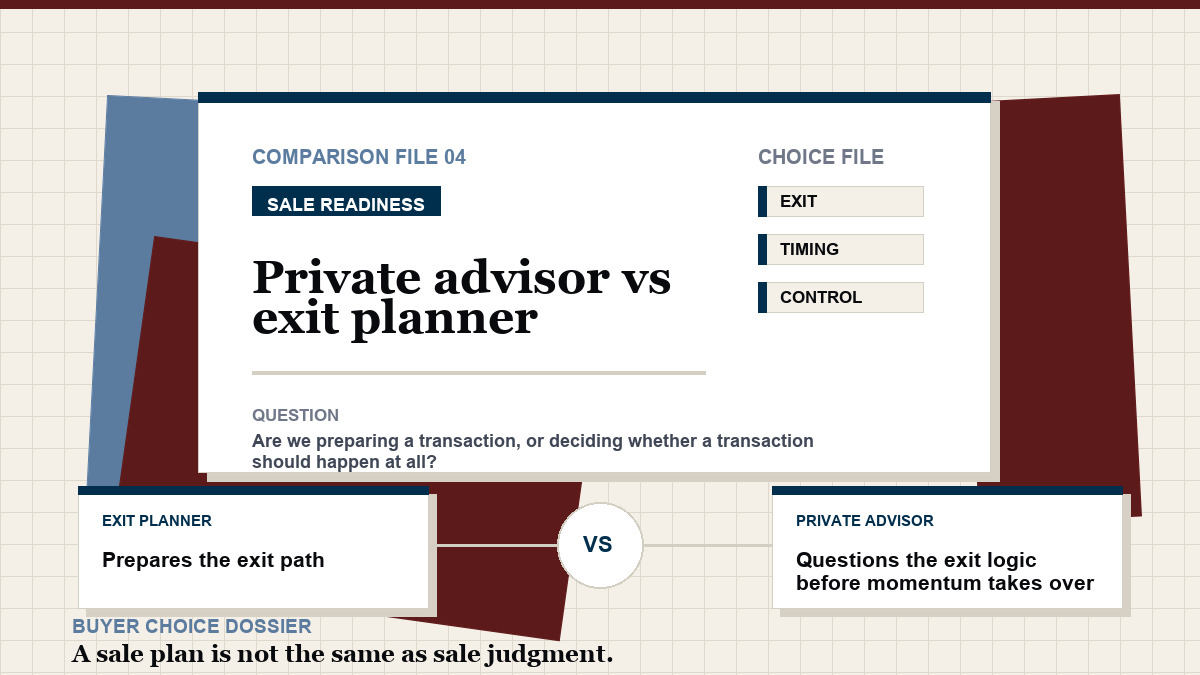
What this work actually is
AI for exit planners is the deliberate use of LLMs and structured automation on comparable transactions research, deal-document drafting from templates, financial model sanity checks, communications drafts, and diligence prep. It runs inside the firm's tenant. The live deal file does not enter shared models.
The hard floor is deal confidentiality, MNPI handling, and the disclosure rules of the regulator. Workflows that respect all three compound. Workflows that do not lose the deal and the next mandate.
One leak ends a boutique. The model never sees the live file. The market reviews everything else.
The scope
What changes when this is done well
What you need before you start
01 · A code-name protocol
Project Aurora, Project Birch. The real name does not appear in prompts, file titles, search queries, or chat names. The protocol is mechanical and survives staff turnover.
02 · A tenanted model with no-train terms
Consumer chats are out for any mandate-related material. Default to vendors with a data-processing addendum and a tenant the firm controls.
03 · A redaction macro
Even on the tenant. The discipline survives a vendor change and a regulator question.
04 · A firm voice file
Loaded into every drafting brief. Stops the deliverable from collapsing into a generic banker voice.
05 · An engagement-letter clause
Which workflows touch AI, how the firm verifies output, the right to opt out. Drafted with risk counsel, versioned with the firm policy.
The split workflow
Human owns
What the seller actually wants. What the business is. The structural business problem. Owned by the advisor.
AI assists
Public M&A activity, multiples, recent buyers, sector themes. Treated as raw material, not citations. Built on code-name only.
Human owns
Who fits, who pays the highest, who closes. Owned by the advisor with knowledge the model does not have.
AI assists
Strategic acquirers, financial buyers, family offices, sponsor portfolios. Public information only. The advisor narrows.
Human owns
What story the document tells. Owned by the advisor with the seller in the business.
AI assists
Section drafts, financial summary grids, market-context paragraphs. Real numbers added later by the advisor in the secure environment.
Human owns
Structure, drivers, scenarios. The model carries the deal's argument. Owned by the advisor.
AI assists
Review the spreadsheet structure (without live numbers if needed), flag inconsistencies, propose alternative assumptions. Sanity check, not source of truth.
Human owns
The conversations. The price signals. The negotiation. Always the advisor.
AI assists
Standard requests, sector-specific items, recent-deal repeated situations. The advisor edits and sends from the data setting.
Human owns
The judgment that closes the deal. The signature on the engagement deliverable. The advisor's relationship.
AI assists
Anonymized after close. Repeated Situations extracted into the firm's prior-deals library, code-name only.
How to know AI is hurting the firm
A target's real name appeared in a prompt.
The code-name protocol failed. Audit the chat history, repair the leak, retrain the team, tighten the prompt template so the friction is mechanical.
Live deal terms reached a non-tenanted model.
A regulatory exposure and a confidentiality breach. Disclose to the client per the engagement letter; review with risk counsel; tighten the workflow.
A CIM section review like a generic banker's voice.
The voice file slipped. Pull the firm's recent CIMs, rebuild the voice file from the older ones, refresh the brief blocks.
A long-list candidate appeared that turned out not to exist.
A hallucination got through. Pull the long list, repair the entry, add the failure to the prompt library so it does not repeat.
A diligence checklist missed a sector-specific item that bit at signing.
The checklist was generated and not edited by sector experience. Restore the senior-on-every-checklist rule.
The post-close summary identified a live target by accident.
The anonymization pass failed. Review the summary, repair, tighten the post-close rule before the next close.
Tools and tactics
The brain holds prior deals, prompt blocks, and voice file. The live file lives in the data setting, not in the brain.
One folder per mandate, code-name only. Voice file pinned to every drafting brief. Five named brief blocks: sector scan, long-list research, CIM mechanics, model audit, diligence checklist. Prior-deals library code-name only, refreshed at close. AI usage log per mandate.
Documented in full inside the engagement · teaser here
Every mandate, every chat, every file. Code names are issued at mandate intake and used until the close-and-anonymize pass. The protocol survives staff turnover because it is mechanical, not memory-based.
Find-and-replace template tied to the active mandates. Strips live names and financials before any paste. Built once, used forever. Removes the friction that breaks the protocol.
One structured pass after every close. Strip the target name, the buyer name, and any unique identifier from the working files before they enter the prior-deals library. Without the pass, the library leaks across mandates over time.
What this work is not
The throughput is on volume and precision. The judgment that closes the deal is the advisor's. The comparison page sets the structural difference between sequencing the deal and examining whether it is the right one.
Review advisor vs. exit planner →When the deal question is the wrong question
Stan reviews each request for fit. All corporate work starts with an inquiry and is quoted separately. Stan confirms the people, stakes, scope, and fee in writing before work starts.
Apply for business coachingWork with me · $1,500/month 1:1 business work · Request scope
