What can a board observer do at a board meeting?
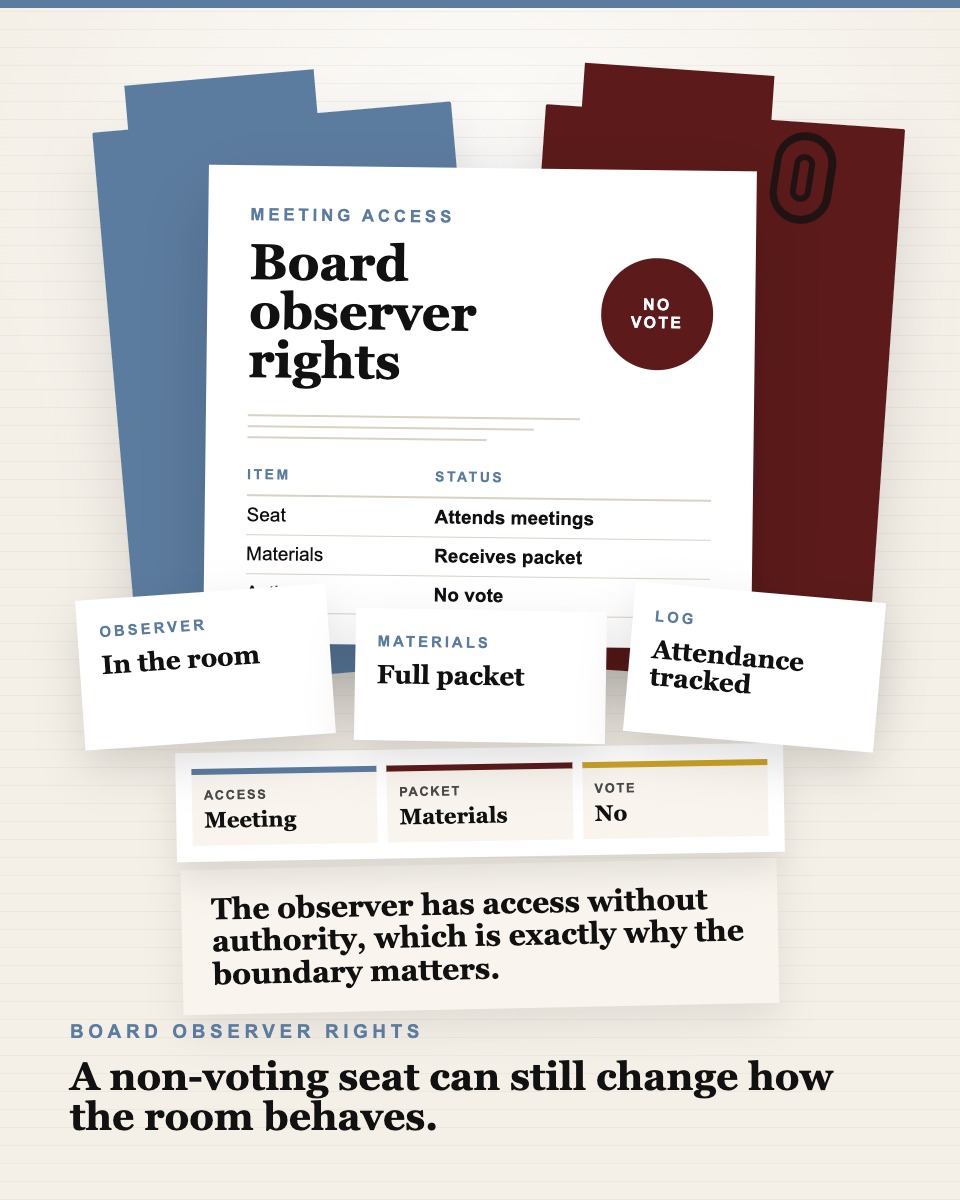
A board observer can attend the meeting, receive the board package, ask questions, and participate in discussion. The observer cannot vote, cannot make motions, and is not counted toward quorum. The role is informational, not authoritative.
Why do investors take an observer seat instead of a voting seat?
Observer seats are lower friction. They give the investor visibility without the fiduciary obligations of a director, without taking up a voting seat, and without the conflict-of-interest exposures of board membership. Investors also use observer seats to extend influence beyond the number of voting board seats they negotiated.
Are board observers entitled to the same information as directors?
Generally yes, by default. Observers receive board materials, attend meetings, and join executive sessions unless explicitly excluded. Some agreements carve out specific items, like sensitive personnel matters or strategic transactions, where the observer is asked to step out. The carve-outs are negotiated.
Can a board observer right be terminated?
Yes. Termination is typically tied to events such as the investor falling below an ownership threshold, a transfer of the underlying shares, or specific termination triggers in the agreement. Some observer rights survive as long as the share class exists. Founders should know the termination conditions before granting the right.