What makes a board member independent?
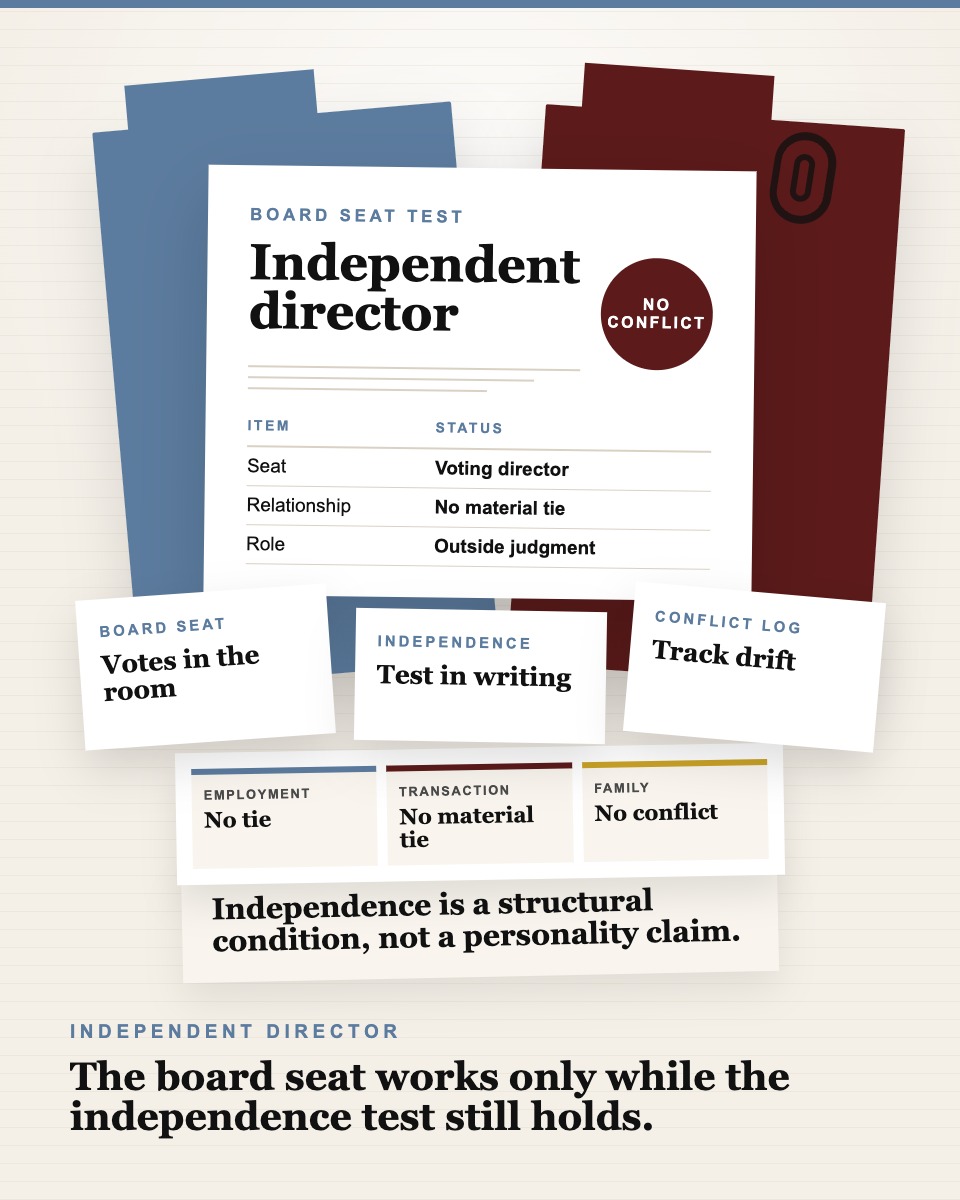
A board member is independent if they have no employment, family, or material business relationship with the company, its management, or its major shareholders. The exact test is written into the bylaws or shareholders agreement. Most tests look back three years and require no current consulting, transactions, or family ties.
Why does a private company need an independent director?
A board only made up of founders and investors lacks structurally separate judgment. Difficult decisions, including conflicts between founder and investor interests, need at least one voice that is not aligned with either side. Independent directors exist to provide that voice.
What happens when an independent director loses independence over time?
The role can drift. New consulting work, paid side projects, or growing equity compensation can each erode independence. When the structural test no longer matches the situation, the bylaws need to be updated and the seat may need to be rotated. Founders and boards often delay this until a real conflict event forces it.
How is an independent director different from a board observer?
An independent director is a voting member of the board. A board observer attends and receives materials but does not vote. Both provide visibility, but only the independent director carries decision authority. The roles are sometimes confused at appointment time and the difference matters at every vote.