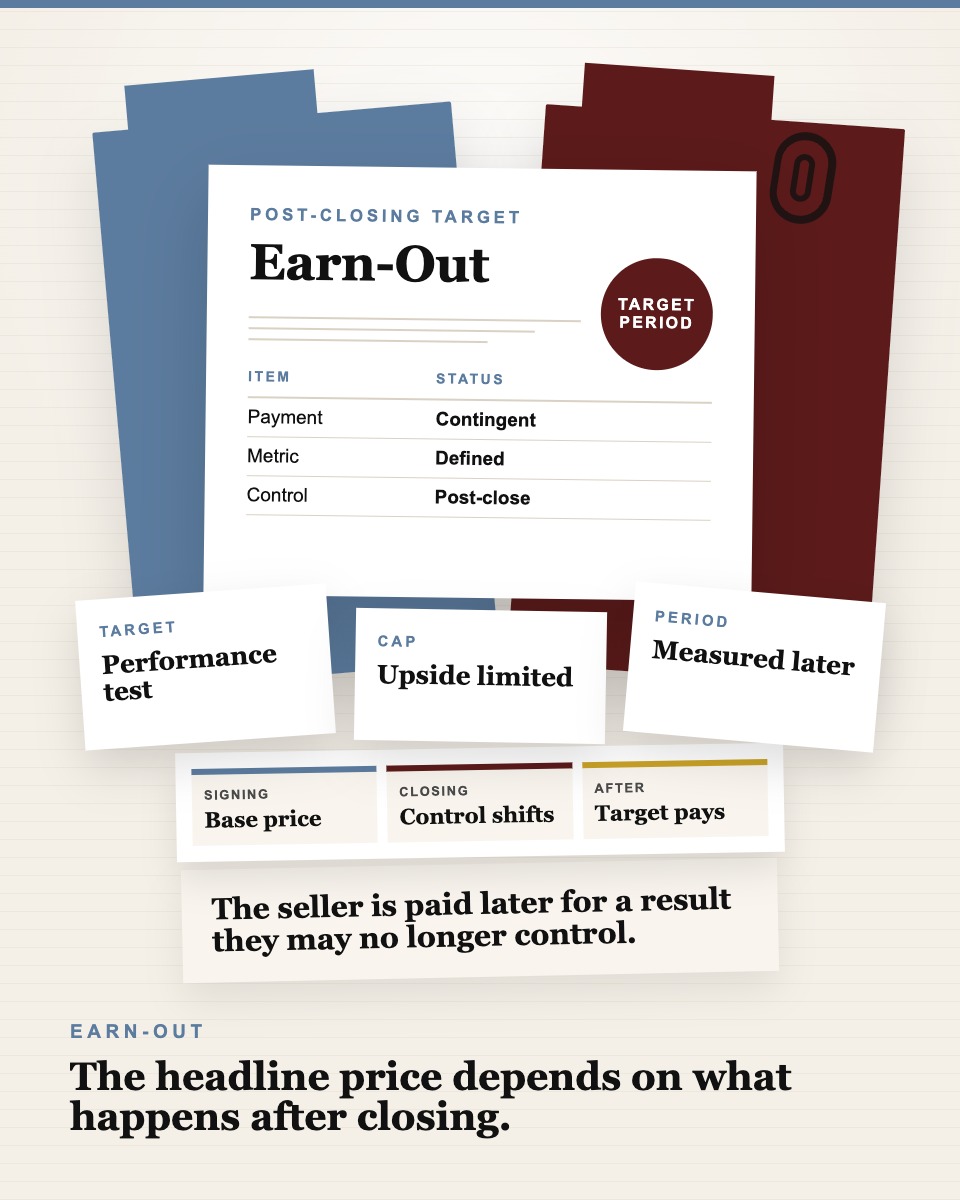
How is an earn-out structured?
An earn-out splits purchase price into a closing payment and a contingent payment tied to defined post-closing performance. The contingent portion is measured against revenue, EBITDA, customer retention, or specific milestones over a measurement period of typically one to three years.
Why do buyers and sellers use earn-outs?
Earn-outs bridge valuation gaps. The seller is more confident in the trajectory. The buyer is unwilling to pay for that confidence upfront. The earn-out shifts a portion of the price to be paid only if the trajectory plays out, sharing risk between the two sides.
What are the most common earn-out disputes?
Disputes typically arise over how the metric is calculated post-closing, how integration costs are allocated, whether the buyer has run the business to hit or to miss the target, and whether the seller had the authority needed to pursue the targets. Most earn-out disputes resolve in arbitration or settlement.
How can a seller protect an earn-out at the negotiation stage?
Define the metric narrowly and based on the standalone business. Carve out integration effects from the calculation. Preserve operating authority for the seller during the measurement period. Avoid metrics the buyer can change unilaterally. Include a defined dispute resolution path with reasonable timing.