Glossary

Escrow Holdback

An escrow holdback is a portion of the purchase price held in a third-party account at closing as security against post-closing claims by the buyer.

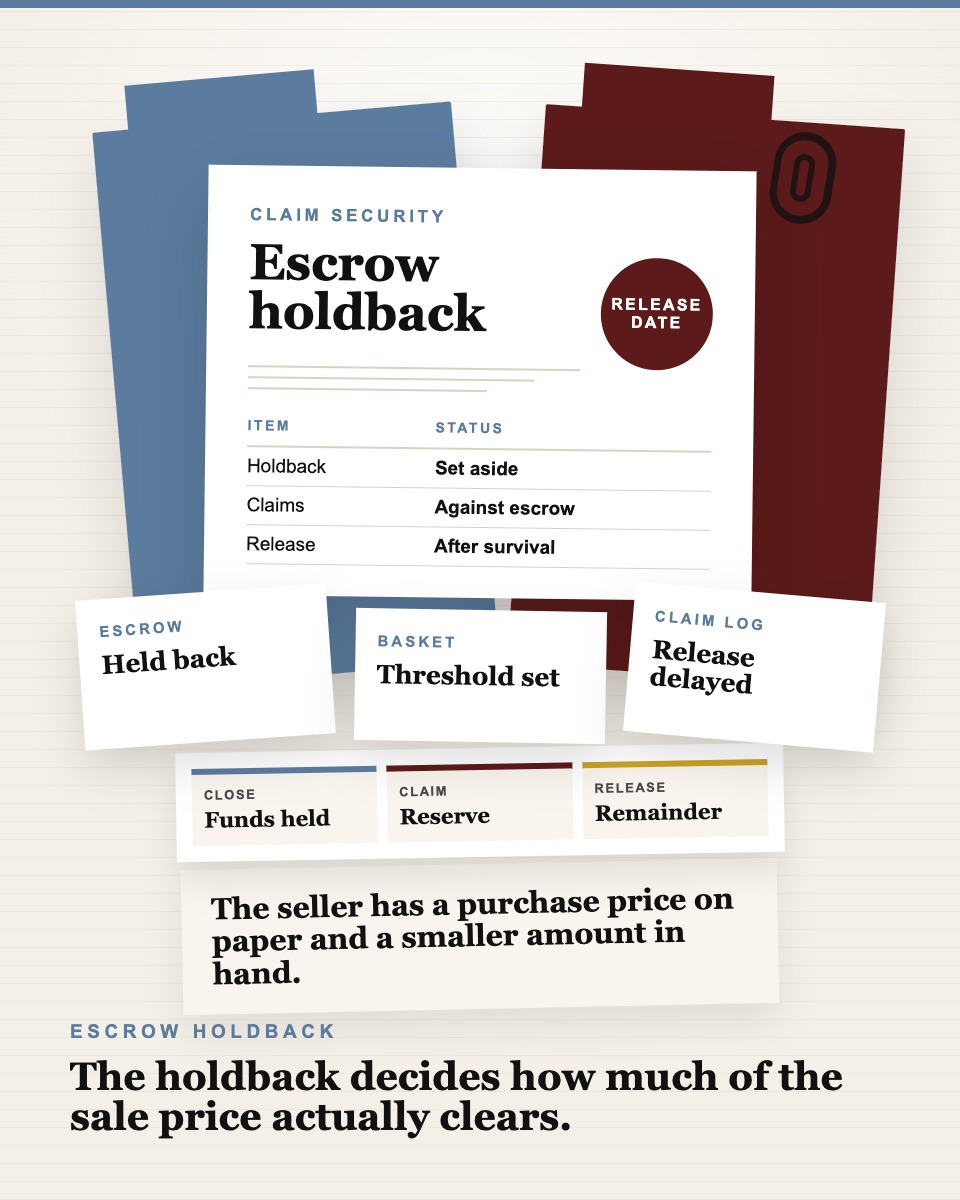
Governance table visual showing an escrow holdback agreement, indemnification claim log, and tranche release schedule.
Reference layer. Mechanisms under pressure.

Plain definition

What it means.

An escrow holdback is a portion of the purchase price withheld at closing and held by an escrow agent. The funds are released to the seller after a defined period if the buyer has not made qualifying claims, typically tied to breaches of representations, warranties, or specific indemnification triggers.

A typical escrow runs 12 to 24 months and holds 5 to 15 percent of the purchase price. The buyer can claim against the escrow for indemnification, working capital adjustments, tax exposures discovered post-closing, or breaches of seller representations. The seller receives any remainder when the escrow expires.

An escrow holdback is the part of the purchase price the seller does not actually have at closing. It exists to make the indemnification clauses enforceable.

What goes wrong

The failure pattern this term exists to prevent.

The claim that touched everything

The buyer makes a single small claim against the escrow. Under the agreement, the entire holdback is frozen until the claim is resolved. The seller waits twelve months for the dispute to settle while the funds are inaccessible.

The basket the seller forgot

The agreement has a basket: claims under a defined dollar amount do not pull from escrow. The buyer aggregates several below-basket items until the threshold is met. The seller assumed each item would be ignored. They were ignored individually and counted in aggregate.

The carve-out that ate the indemnity cap

The escrow has a cap. Some categories of claims, like fundamental representations or fraud, are carved out from the cap. The buyer brings a claim under a fundamental rep. The seller learns the carve-out leaves them exposed beyond the original cap by an order of magnitude.

The release schedule that never reached release

The escrow is structured to release in tranches. Each tranche release requires the buyer to confirm no outstanding claims. The buyer keeps small open items active across each release window. The release date arrives but no funds move.

Founder questions

The questions people actually ask.

How long does an escrow holdback typically run? Most escrow holdbacks run 12 to 24 months from closing, aligned to the survival period of the seller's representations and warranties. Specific items, like tax exposures or fundamental reps, may carry longer survival periods and corresponding longer escrow tail.
What does the buyer claim against escrow for? Buyers claim against escrow for indemnifiable losses arising from breaches of representations and warranties, breaches of covenants, working capital adjustments, tax exposures discovered post-closing, or specific risks identified during diligence and listed as escrow triggers.
What is an escrow basket? A basket is a threshold below which buyer claims do not pull from escrow. A deductible basket means the seller is responsible only for losses above the threshold. A tipping basket means once the threshold is met, all losses, including those below it, become recoverable.
When are escrow funds finally released? Funds are released on the dates defined in the escrow agreement, typically the 12-month or 18-month anniversary of closing, less any amounts held to cover open claims. Open claims continue to delay release of the corresponding portion until they are resolved.

If an escrow holdback is being structured and the cap, the basket, or the carve-out language is on the table, that is a different conversation.

Bring the term sheet, the proposed escrow agreement, and the cap and basket structure as drafted.