
When Equity Became the Argument: A Case Note
Open with the case. The argument was never about equity. The argument was about what equity was being asked to settle. Review this first to see the shape.
Agree who decides what, work through a disagreement about direction, or find guidance for a serious dispute. Start with the part you need.
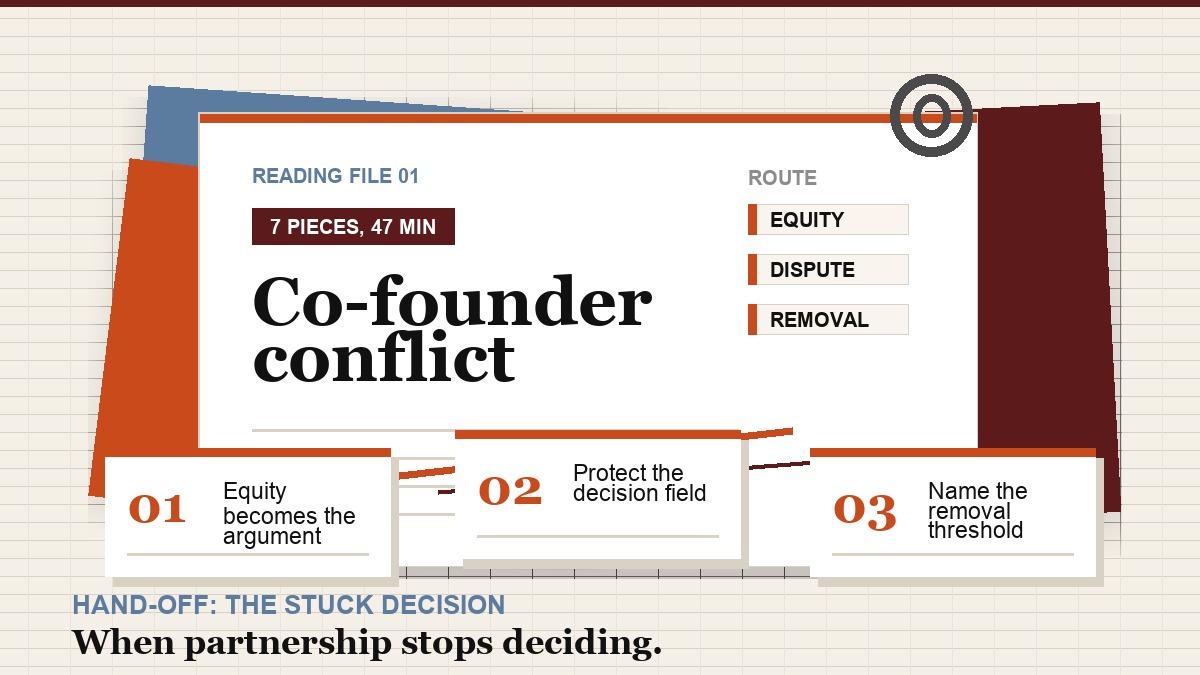
A routine disagreement does not mean the partnership needs to end. Choose the guide that matches the issue.
For routine work, agree who decides, who gives input, and which choices need joint approval. Written decision roles record authority you already have; they cannot change ownership or override your governing agreements. If control, removal, a buyout, or legal rights are disputed, use those documents and qualified counsel before acting. The readings below explain those more serious situations.
Open with the case. The argument was never about equity. The argument was about what equity was being asked to settle. Review this first to see the shape.
The case shows the shape. This guide is the protective frame, written for someone who is in the dispute right now.
The protective frame buys time. This essay names the threshold: when the partnership has crossed from fixable to structural.
If business owner coaching surfaced a structural problem, the next question is the threshold conditions for removal. Four of them.
And here is what the removal actually looked like. A $14M services business. Three years of disagreement. The options that worked and the ones that did not.
Removal is one structure. Buyout is another. This guide names when the partnership has become expensive enough that buying control is cleaner than continuing ambiguity.
Closing piece, written for the next partnership, not this one. What a partnership agreement that survives a real disagreement actually contains.
An unresolved partnership conflict compounds at every level. Decisions that should close stay open. Talent reviews the business and stops trusting senior judgment. Capital sees instability and prices it. The cost is not the conflict itself. The cost is the structural ambiguity that the conflict signals and that nobody has named yet.
One-to-one business work with Stan is $1,500/month. Every two weeks, month to month.
See coaching details → If you want to keep reviewingOne business problem in each issue, with its cause and what to check next.
Subscribe → Before getting startedCheck what coaching covers, what it does not, and how payment and booking work.
Review the session →