
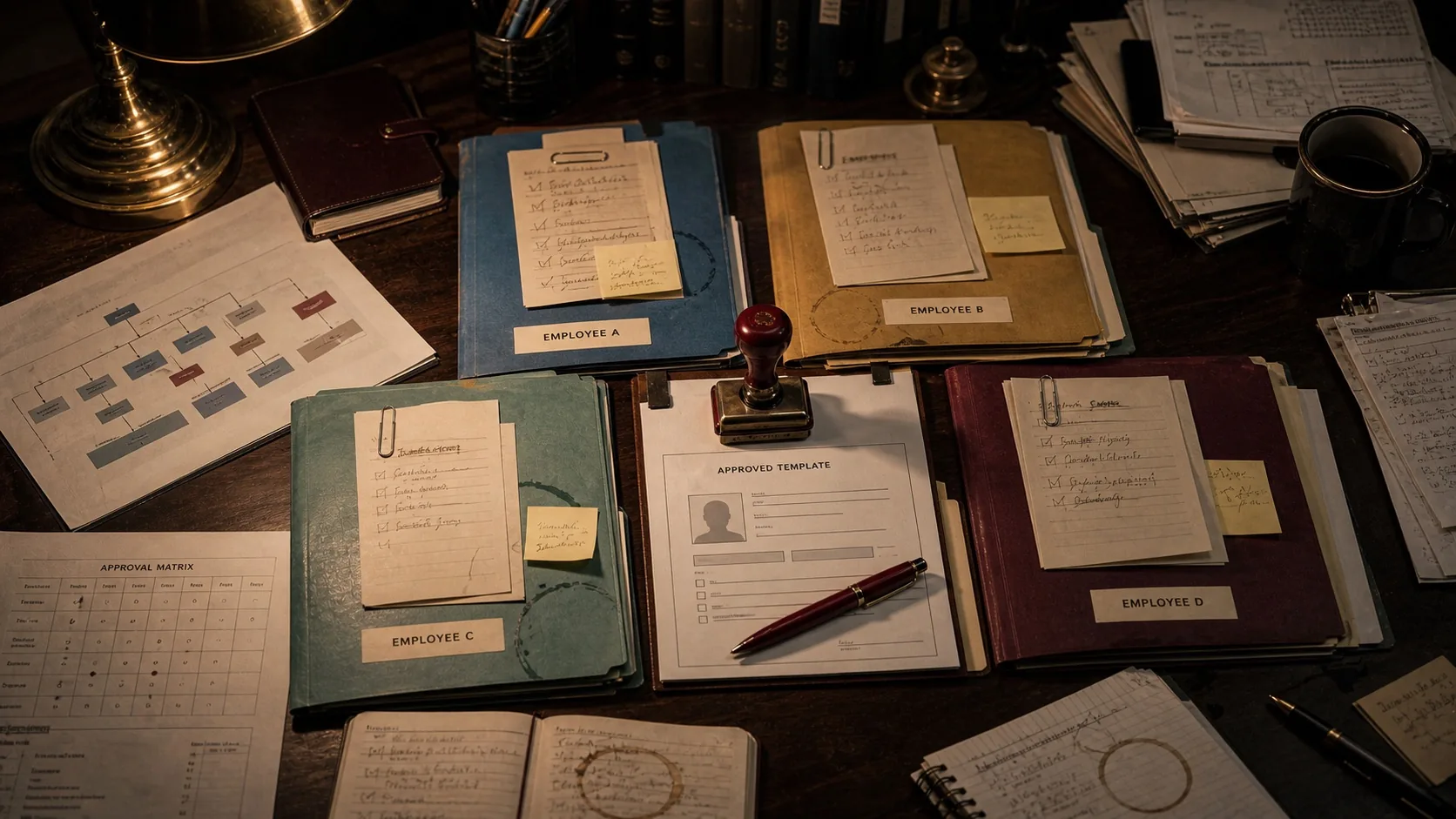
The founder says he cannot find good people.
Strange.
The company hired three of them.
One questioned the discount rule.
One changed a process before asking permission.
One saw the customer problem from a different angle.
All three learned the same lesson.
Think like the founder.
Speak like the founder.
Move only after the founder's nervous system approves the move.
Then the founder announced that nobody takes ownership anymore.
Beautiful.
Why do founders say they cannot find good people?
Founders often say they cannot find good people after building a company where different thinking is punished. The employee can be right on performance and still wrong culturally if the founder expects a clone. The real test is whether the person can get the important 80 percent right inside a clear authority boundary.
This is not only a startup problem.
Large organizations do the same thing with better badges.
They call it alignment.
Culture fit.
Executive presence.
Communication style.
Translation: you made us uncomfortable by seeing something we were pretending not to see.
So the organization treats different thinking like contamination.
Not because the thinking is weak.
Because the thinking did not arrive wearing the approved costume.
If you hire a person because they bring a different angle, the different angle has to survive contact with you.
Otherwise you did not hire judgment.
You hired labor with a forbidden opinion attached.
The employee gives a cleaner review of the customer.
The founder hears disloyalty.
The employee names a weak process.
The manager hears attitude.
The employee refuses to copy the old mistake with a new dashboard.
The organization hears cancer.
The company wanted ownership. It built a clone factory.
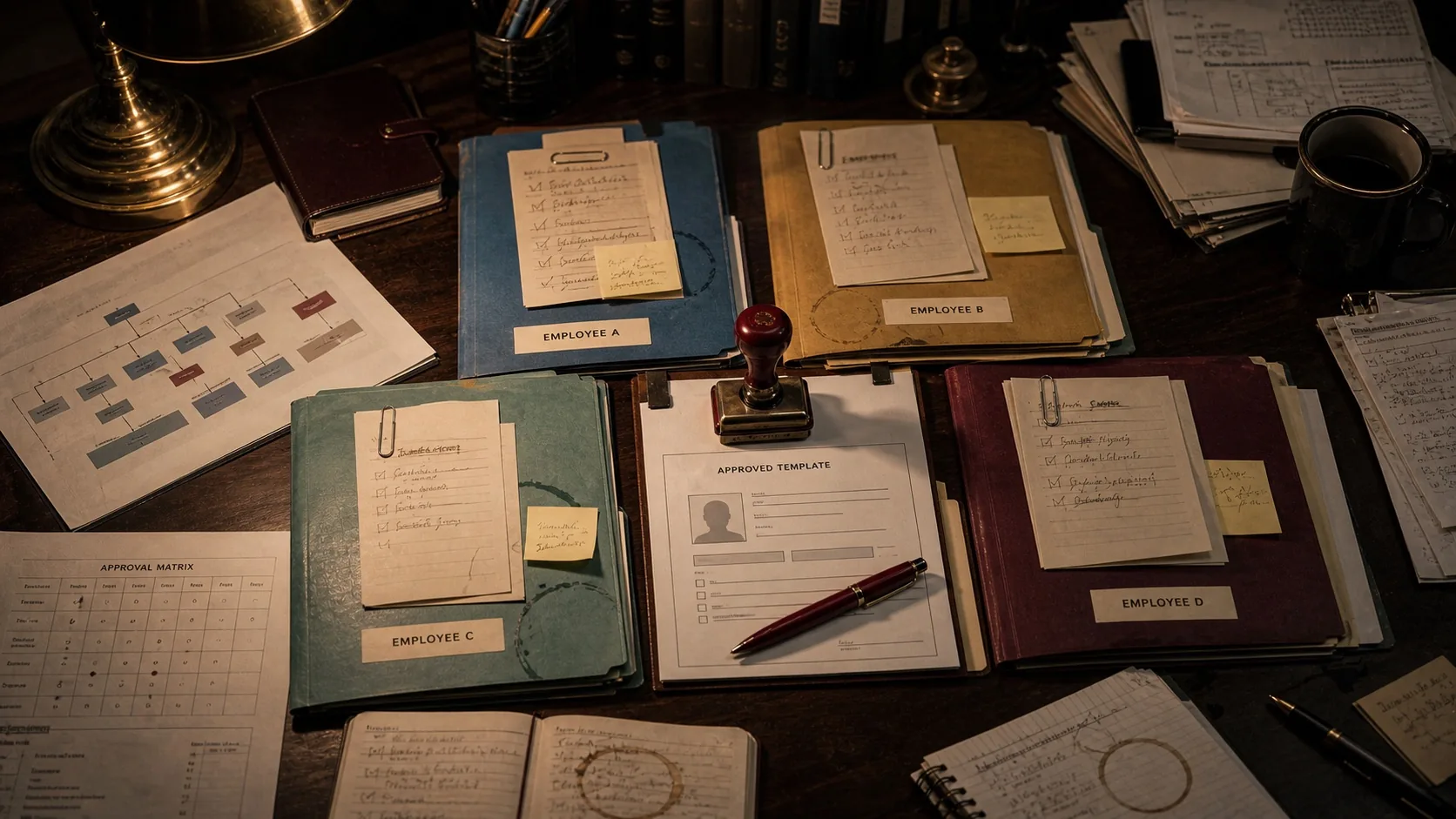
Old story
We cannot find good people.
Real mechanism
We punish useful difference until it becomes silence.
Margin note: If every strong person becomes passive inside your company, the pattern may not be the labor market. Awkward, yes. Useful, also yes.
Performance should be the standard.
Not sameness.
Not personality comfort.
Not whether the person uses the exact words the founder would use.
The question is simpler.
Can this person carry the important part of the work without dragging every decision back to the founder?
If a person can get the important 80 percent right inside a clear boundary, stop stealing the decision back to perfect the last 20 percent.That last 20 percent is where many founders hide.
They polish taste.
They correct tone.
They re-decide settled decisions.
Then they call the employee dependent.
THE VERY SERIOUS TRANSLATION
Official version
We need people who take ownership and fit our culture.
Translation
Please become me, but cheaper, calmer, and grateful for the costume.
This is the work-environment split.
Good companies are not soft because everyone is allowed to have a feeling.
Good companies are strong because useful difference can survive long enough to improve the result.
Bad companies punish difference before performance gets measured.
Then they keep the obedient people.
Then they wonder why nobody sees around corners.
Very mysterious.
Different people bring different pattern memory.
Different risk tolerance.
Different customer sense.
Different ability to see the bad process everyone else has learned to walk around.
That difference is not a defect in the hire.
It is the reason the hire might be useful.
Clear boundary
Name what the person owns, what they cannot change, and what performance means.
80 percent right
If the important work is right, do not drag the decision back for founder comfort.
Founder time freed
The returned 20 percent of founder attention can produce most of the next result.
This is not permission to accept sloppy work.
Standards still matter.
Performance still matters.
But if your standard is really just "do it the way I would have done it," say that clearly.
At least then the job posting can be honest.
Wanted: full human being. Must arrive pre-shrunk.
If every useful person has to become smaller to survive you, the hiring problem is not outside the building.