AI-for-X · boards and directors
A serious director arrives at the meeting having reviewed the pack, talked to two managers, and formed a position. AI helps with the review. It does not enter the meeting, does not see MNPI under loose terms, and does not vote. This manual is the line, the workflow, and the second-brain stack a director can run alone.
Read the scope Founder-side governance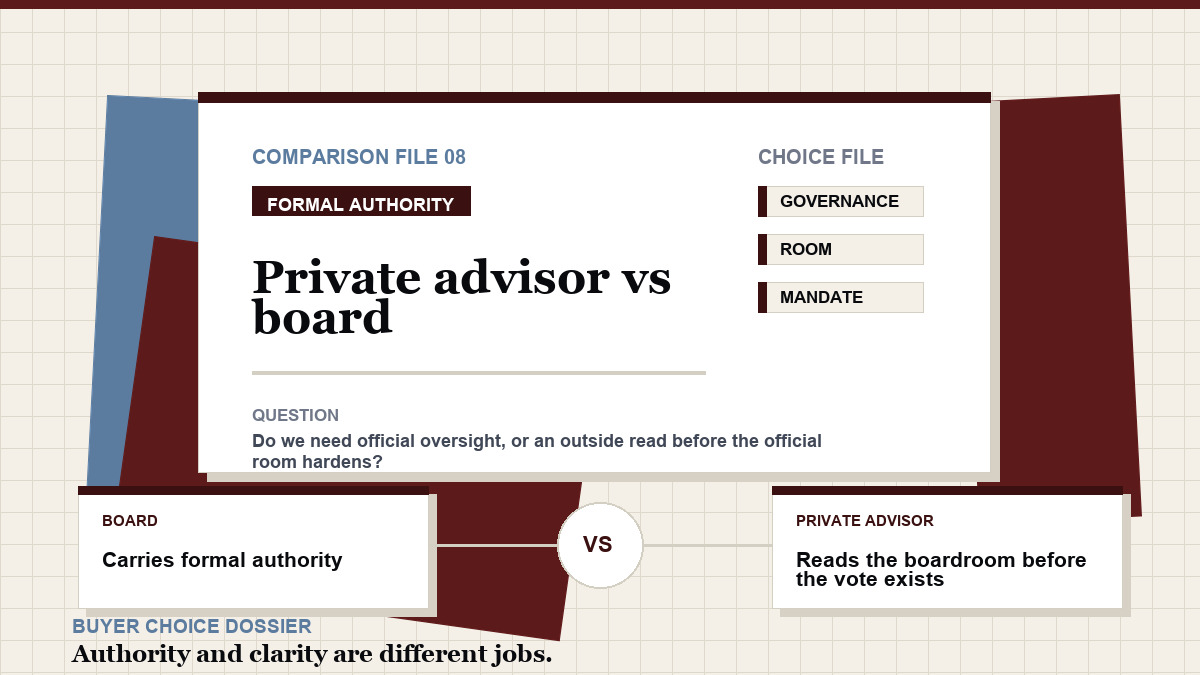
What this work actually is
AI for boards is the deliberate use of LLMs on the work that surrounds the meeting: digesting the pack, drafting the briefing note, researching governance and comparables, summarizing minutes, tracking actions. It runs on the director's tenant. It does not see MNPI under consumer terms. It does not vote, sign, or speak in the meeting.
The hard floor is MNPI handling, fiduciary duty, and the recordable governance log. Workflows that respect all three compound. Workflows that do not generate insider-trading inquiries.
Fiduciary duty is non-delegable. A director who outsourced the review outsourced the duty.
The scope
What changes when this is done well
What you need before you start
01 · A personal AI policy filed with the secretary
Filed alongside your D&O and your conflicts declaration. Refreshed annually. The policy is what makes the workflow defensible if anyone asks.
02 · A tenanted model with no-train terms
Consumer chats are out for board material. Default to vendors with a data-processing addendum and a tenant you control.
03 · A redaction discipline
Even on the tenant. The discipline is what protects you if vendor terms change without you noticing.
04 · A trading-window awareness
AI use does not change the rules; it can amplify the consequences. pre-brief prompts during a closed window deserve extra care, not less.
05 · A pack-handling rule
Most directors mishandle the pack as soon as it leaves the portal. The rule covers download, AI processing, and deletion within a fixed window.
The split workflow
Human owns
Audit committee report, going-concern, related-party, executive comp, litigation update. The director reviews these end-to-end, no shortcut.
AI assists
Routine sections summarized, KPI movements highlighted, prior-period diff surfaced. The director reviews the brief and decides which routine section deserves a deeper review.
Human owns
What you think, why, what you would push on, where you would defer. Written by you, in the file, before any prompt.
AI assists
Standing prompt: review the position as the strongest critic; name the weakest claim, the data you have not seen, the question you should ask. The director edits the position; AI does not write it.
Human owns
Direct conversations with the CEO, CFO, head of audit. Owned by the director. Not summarized into a shared model after the call.
AI assists
Top fifteen questions a serious director would ask, ranked by materiality. The director picks five. The list is not handed to management.
Human owns
The team is the work. AI is not in the team, not transcribing in the background, not running real-time summary. The director shows up and listens.
AI assists
Where the chair, AI digests management's prior commitments, surfaces the open items, and drafts the agenda flow. Chair reviews, edits, owns.
Human owns
The director's vote is the director's. Always. The rationale is in the minutes and in the director's personal file.
AI assists
Track how this vote sits against your prior positions. Flag inconsistencies. The log is the director's, not the company's.
Human owns
The chase between meetings. Owned by the chair and the corporate secretary in formal terms; owned by every director on the items they sponsored.
AI assists
Pull the minutes, list the actions, surface what slipped from the prior meeting, prepare the chase note. Chair signs.
How to know AI is hurting the seat
A consequential section was review only via the AI summary.
The duty has slipped. Review the section end-to-end before the next meeting and restore the section-by-section discipline.
MNPI reached a consumer model.
A regulatory exposure. Disclose to the company secretary; review the leak; tighten the redaction discipline and the storage rule.
The position you brought to the meeting was generated, not chosen.
The throughput reversed. Reverse the flow: write your position first, then ask AI for the strongest counter.
The question you asked management was clearly assembled by AI.
You handed AI's question to management. pre-brief prompts surface candidates; you choose, edit, and own the question in the team.
The pack was processed during a closed trading window without extra care.
The window does not change the AI rules; it raises the cost of any leak. Tighten the storage rule and the deletion timing for window periods.
The personal AI policy has not been reviewed since you joined the board.
The policy is stale. Refresh against current vendor terms, current company policy, and current regulatory guidance.
Tools and tactics
The brain holds the pack history, the position log, and the action follow-through. It is the director's continuity across years.
One folder per board. Personal AI policy at the top. Per-meeting subfolder: pack digest, position memo, question stack, voting log, action follow-through. MNPI never enters the brain; redacted equivalents only. Annual review by the director against the policy.
Documented in full inside the engagement · teaser here
Download, process, delete within a fixed window. Storage location named. Redacted equivalents only into the brain. The rule survives a vendor change.
One paragraph used after every position memo. "Review this as the strongest critic. Name the weakest claim, the data I have not seen, the question I should ask before the vote." Used to sharpen the director's own writing.
Date, item, vote, rationale in one sentence. Kept by the director, not the company. Reviewed against new votes to surface inconsistencies.
What this work is not
The throughput is on the review-in. The fiduciary duty is on the seat. The comparison page sets the structural difference between governance authority and an advisor's review.
Review advisor vs. board →When the seat question is the wrong question
Stan reviews each request for fit. All corporate work starts with an inquiry and is quoted separately. Stan confirms the people, stakes, scope, and fee in writing before work starts.
Apply for business coachingWork with me · $1,500/month 1:1 business work · Request scope
