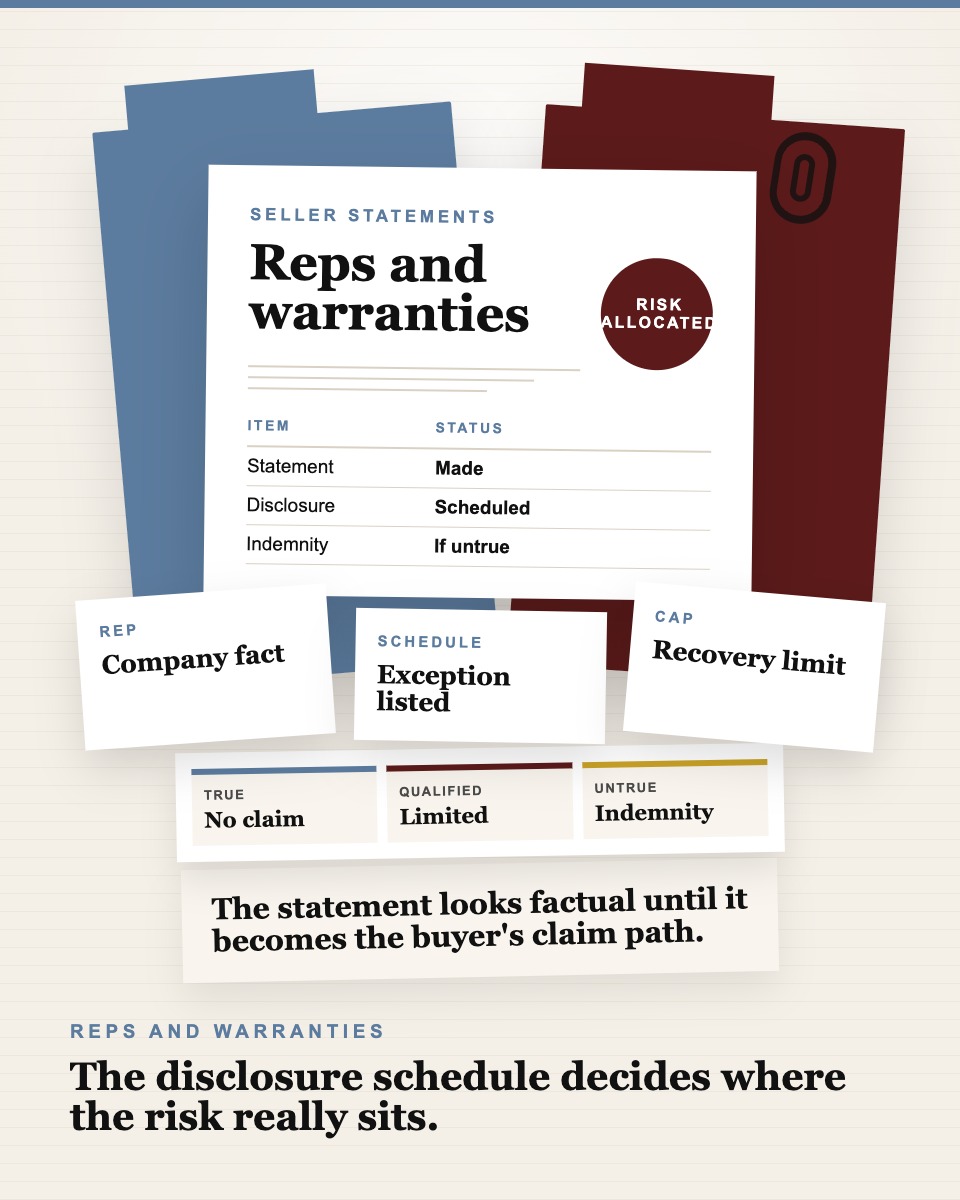
What do reps and warranties cover in a purchase agreement?
Reps and warranties cover financial statements, contracts, employees and benefit plans, intellectual property, litigation, regulatory compliance, taxes, environmental matters, and other defined aspects of the business. The list runs to many pages and is heavily negotiated.
What is the difference between fundamental and general reps?
Fundamental reps cover authority, ownership of shares, capitalization, and tax. They typically survive longer, are carved out from the indemnification cap, and may not be subject to materiality qualifiers. General reps cover the rest of the business and are usually subject to caps, baskets, materiality qualifiers, and shorter survival periods.
What is a materiality scrape?
A materiality scrape is a contractual provision that removes materiality qualifiers from reps when calculating damages. The qualifier still applies for determining whether a breach occurred. Once a breach is established, all losses, including immaterial ones, become recoverable.
How does rep and warranty insurance change the exposure?
Rep and warranty insurance shifts a portion of the indemnification exposure from the seller to a third-party insurer. The buyer claims against the policy rather than the seller for covered breaches. It allows for smaller escrows, lower seller exposure, and faster release of holdbacks. Coverage carve-outs and retention apply.