What is a typical breakup fee size?
Breakup fees in M&A transactions typically range from 1 to 4 percent of deal value. Higher percentages tend to face scrutiny from courts as potentially deterring superior offers. The exact size reflects deal size, market norms, and the relative negotiating posture of the two sides.
When does a breakup fee actually trigger?
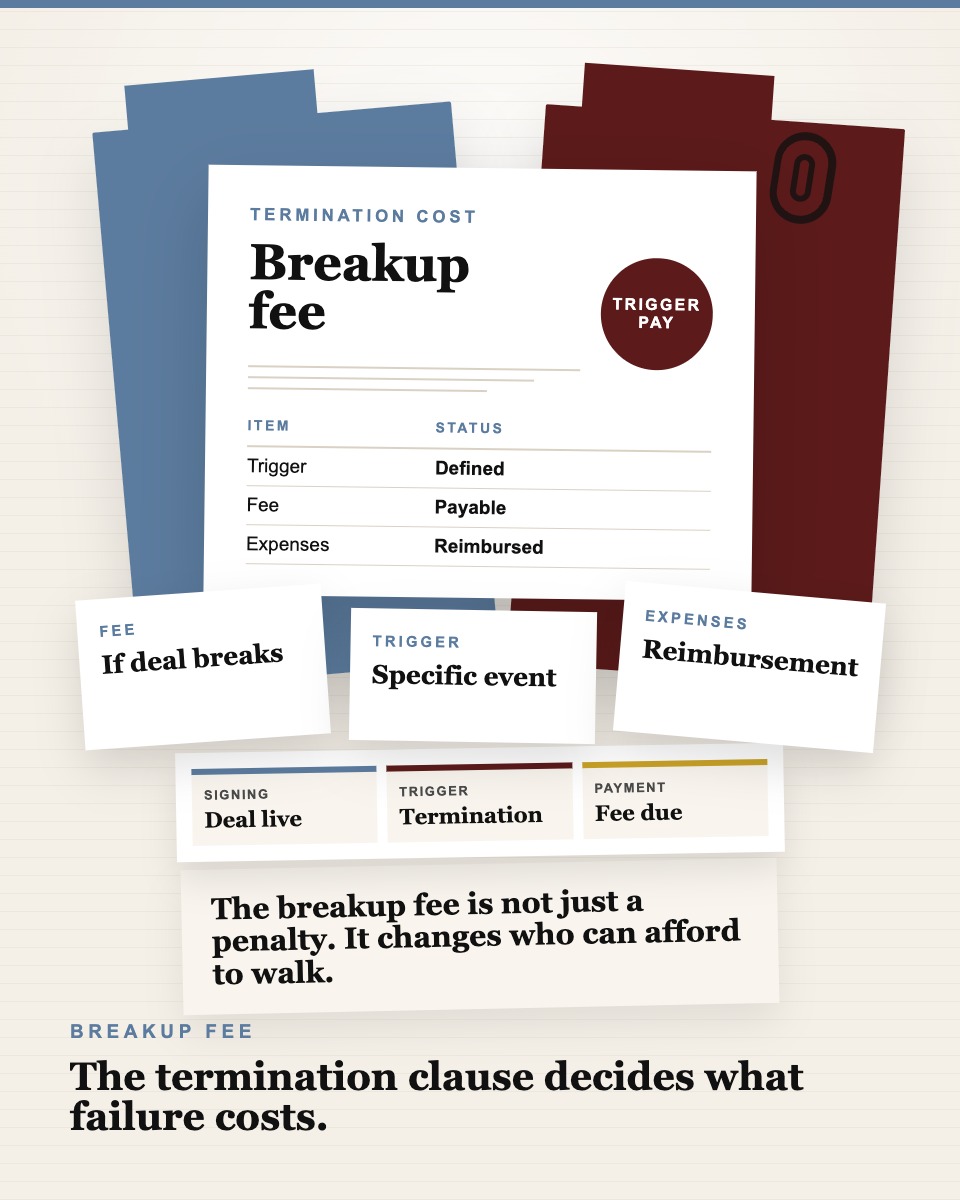
Common triggers include the seller accepting a superior offer, the seller's board changing its recommendation, failure of seller shareholder approval, or specific buyer-side defaults. The exact triggers are written into the termination provisions of the definitive agreement and shape who actually carries the cost when a deal falls apart.
What is a reverse termination fee?
A reverse termination fee is a payment owed by the buyer if the buyer walks or fails to close under specified circumstances. It is most common when the buyer's ability to close is conditional, such as on financing or regulatory approval. The size and triggers are negotiated and often differ from the seller-side breakup fee.
How does a breakup fee differ from liquidated damages?
A breakup fee is a fixed payment tied to specific termination events. Liquidated damages are a contractual estimate of harm if the contract is breached and are typically tied to actual breach rather than termination. Both can apply in the same agreement and both can be enforced subject to court review of reasonableness.