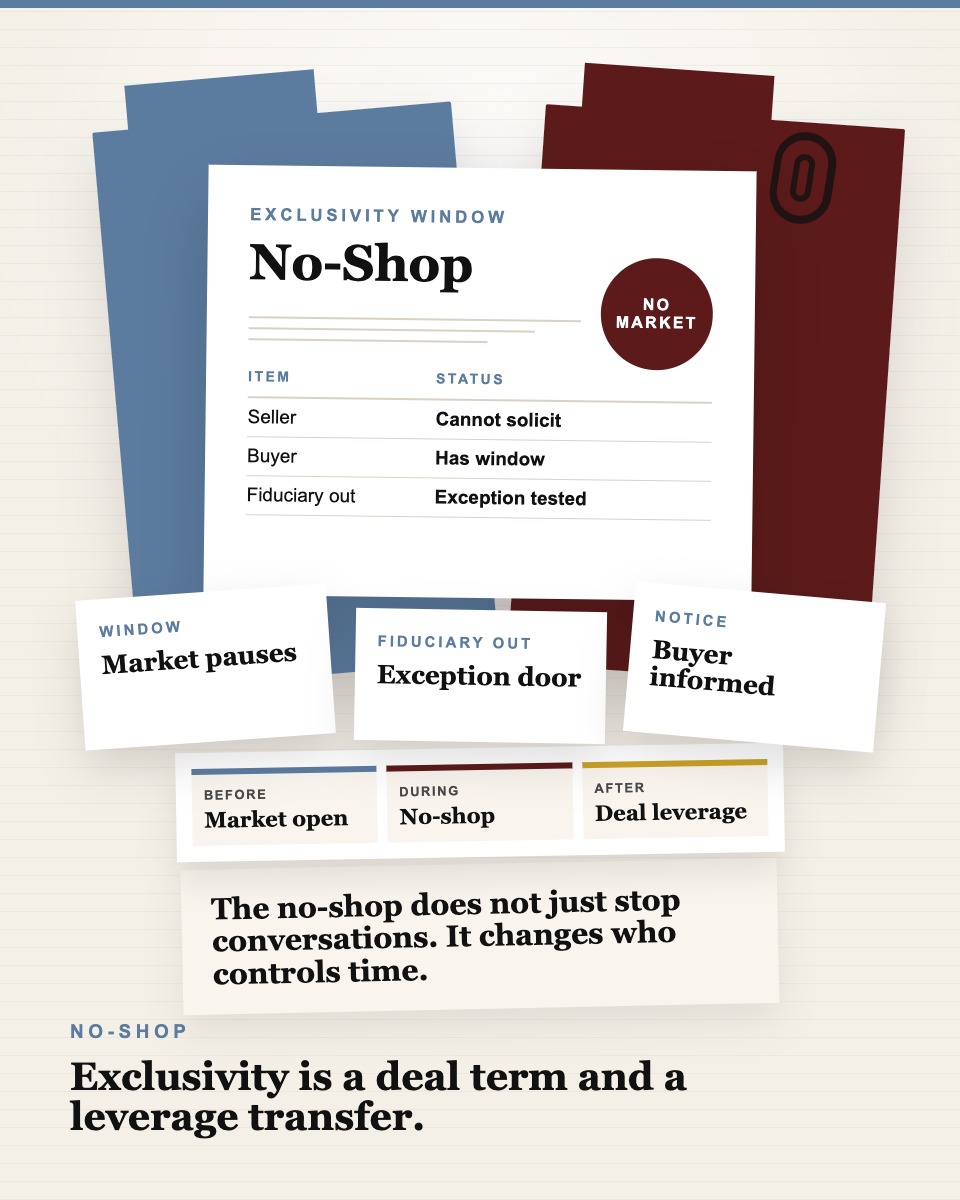
What does a no-shop actually prohibit?
A no-shop prohibits the seller from soliciting, encouraging, or engaging in discussions with alternative buyers during the period defined in the agreement. It usually covers the seller, its officers, directors, employees, and advisors. It typically also covers sharing diligence materials with parties outside the agreed deal.
What is a fiduciary out exception?
A fiduciary out is a carve-out that allows the seller's board to consider an unsolicited superior proposal if its directors believe failing to do so would breach their fiduciary duty. The carve-out is conditioned on procedural steps such as notifying the existing buyer, providing a defined response window, and meeting a specific superiority test.
How long does a no-shop typically run?
No-shop periods commonly run 30 to 90 days at term sheet stage, with extensions sometimes negotiated for diligence delays. In definitive agreements, a no-shop often extends through closing. The exact duration depends on deal complexity, regulatory approval timing, and negotiating posture.
Can a no-shop be extended?
Yes. Extensions are common when diligence runs long or regulatory approvals are pending. Extensions favor the buyer and erode the seller's optionality. Sellers who agree to repeated extensions without revisiting the broader terms often discover that the cumulative period exceeded what they would have agreed to originally.