How long does an exclusivity period typically run?
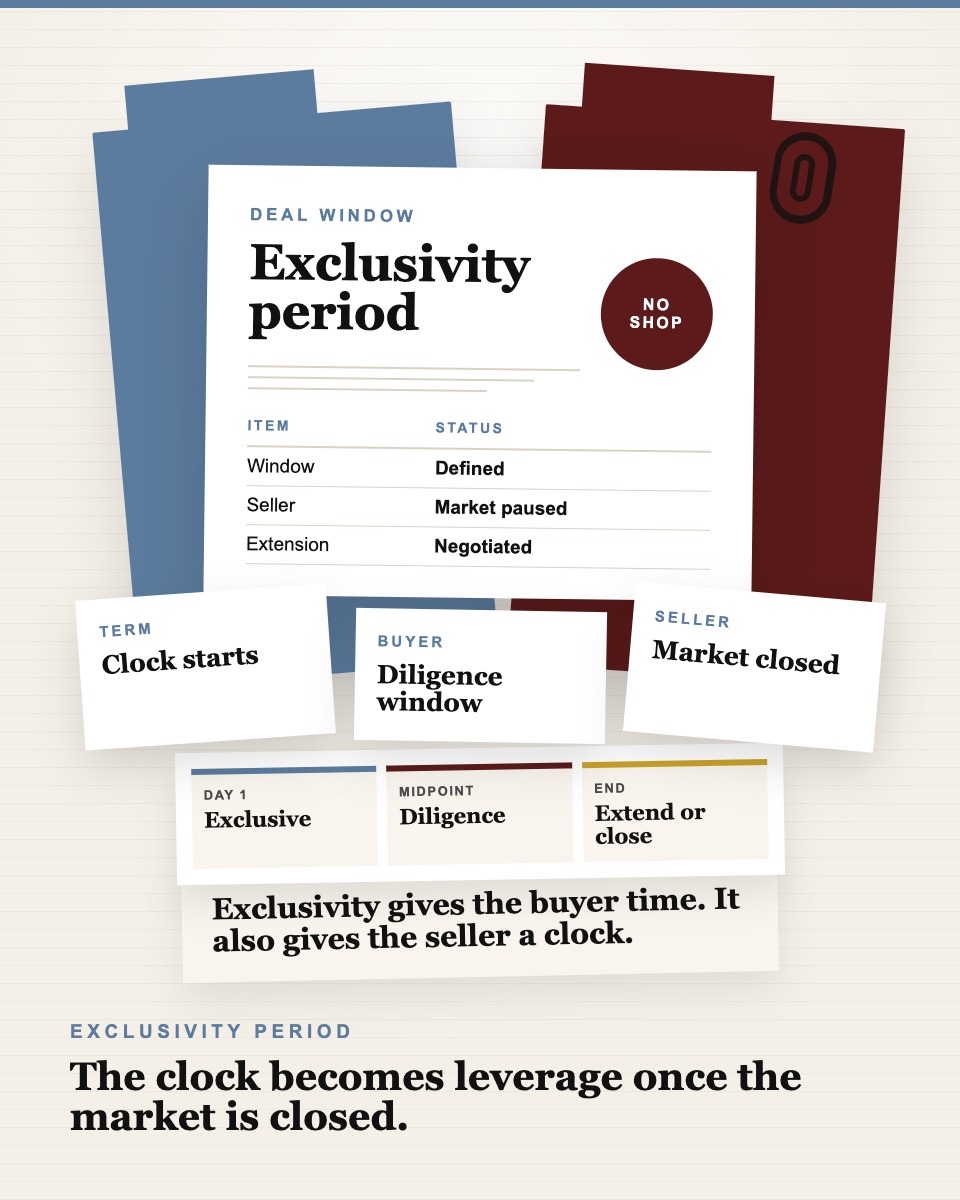
Term sheet exclusivity commonly runs 30 to 90 days. Definitive agreement no-shops typically run from signing through closing. Extensions are negotiated when diligence or regulatory approvals run long. Longer periods favor the buyer. Shorter periods preserve more competition for the seller.
How is exclusivity different from a no-shop?
The terms overlap in practical use and are sometimes used interchangeably. Exclusivity period typically refers to the broader window from term sheet through signing. A no-shop is the contractual mechanism that enforces it. The same agreement may use both terms for the same restriction.
What carve-outs are common in exclusivity provisions?
Common carve-outs include unsolicited bona fide offers, fiduciary out exceptions for the seller's board, and specific situations such as written notice from a competing buyer. Each carve-out is conditioned on procedural requirements that have to be met for the seller to engage outside exclusivity.
Can exclusivity be unilateral or mutual?
Most exclusivity is unilateral, binding only the seller. Mutual exclusivity, where the buyer also commits not to pursue alternative targets, is occasionally negotiated when the seller has significant alternatives or the buyer's resources are constrained. Mutual exclusivity is more common in strategic or competitive sale processes.