
Owner decision
Which decisions require approval, and at what business threshold?
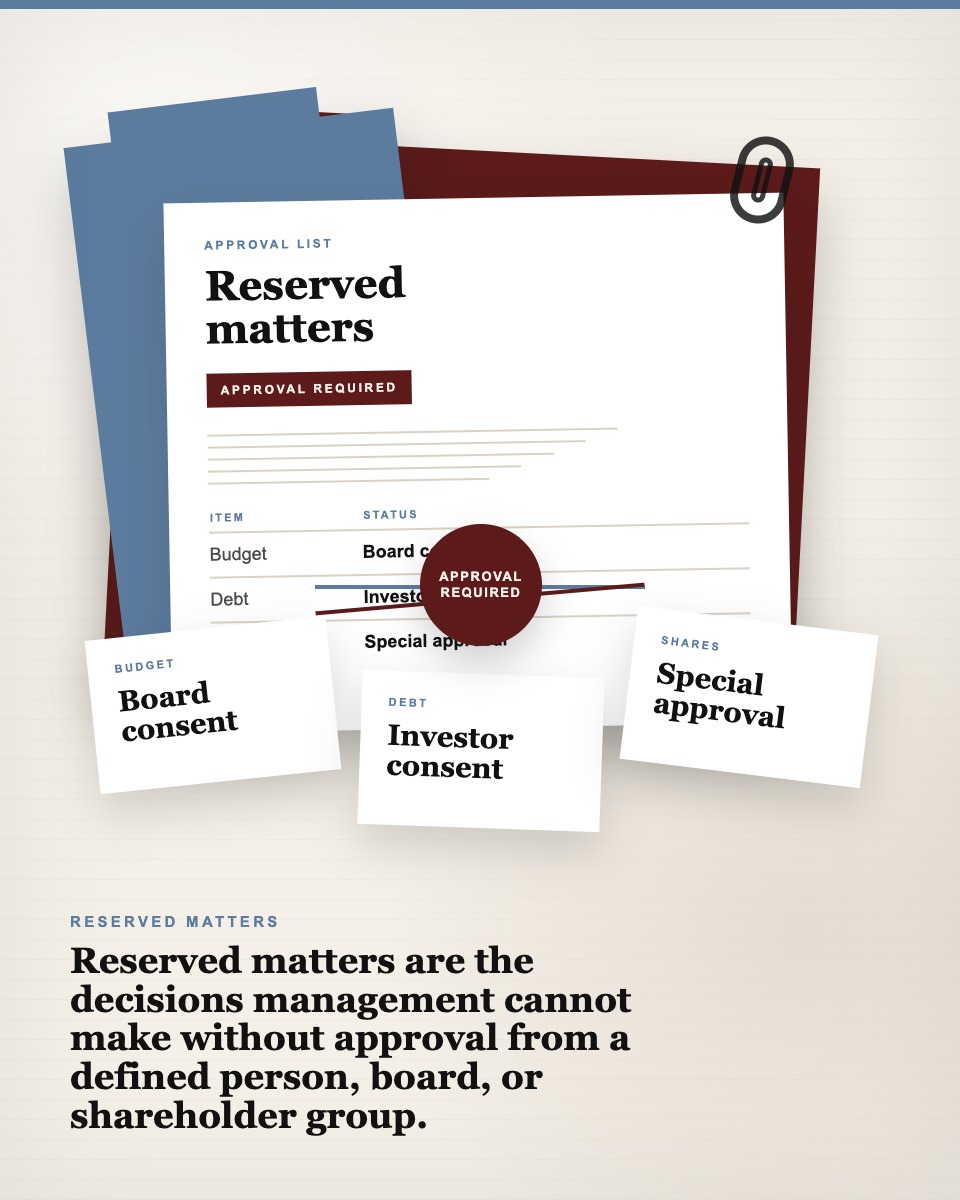
Require approval for decisions the owners or board have explicitly reserved because of control, capital, legal, reputation, or irreversible consequence. Set thresholds from the company's governance documents and risk, not from a universal template.
Use this now: Create a reserved-matters schedule with decision class, threshold, approving authority, evidence required, and emergency path.
Owner worksheet
Approval-threshold matrix
| Check | Write down |
|---|---|
| Decision category | Name the recurring spend, pricing, people, contract, risk, customer, or operating decision whose approval path must be explicit. |
| Normal authority | Record the role that decides inside the normal range, its amount or condition limit, and the evidence recorded after the decision. |
| Threshold event | Define the measurable amount, duration, legal exposure, customer consequence, or strategic condition that moves approval upward. |
| Reserved approver | Name the person or body that decides after the threshold, the information required, and the maximum response time before escalation. |
| Exception record | Log waivers, emergency actions, repeated threshold crossings, and whether the threshold still matches actual business risk. |
Close the decision: Publish one approval path per decision category and revise the threshold from observed risk and delay, not private case-by-case owner intervention.
Worked example
Illustrative approval thresholds derived from governing authority
Illustrative only: Hypothetical authority amounts are not benchmarks. Actual governing documents, applicable law, and qualified legal/governance review control.
| Step | Illustrative input | Replace with your evidence | Completed test or status |
|---|---|---|---|
| Controlling source | Illustrative board resolution delegates budgeted operating purchases up to $5,000 to operations and up to $25,000 to finance; contracts longer than 12 months remain reserved. | Actual signed resolution, bylaws, policy, budget, and applicable law reviewed by qualified counsel. | These are hypothetical company terms, not market thresholds. |
| Normal authority | Operations manager decides budgeted purchases <=$5,000 when no new data, guarantee, or customer obligation is created. | Current budget, approved vendor, and delegated-authority record. | Amount and non-dollar conditions both apply. |
| Threshold event | Escalate when spend exceeds $5,000, term exceeds 12 months, personal guarantee appears, or the action creates material privacy/reputation exposure. | Contract terms and risk classification. | A small dollar amount cannot bypass a reserved non-dollar condition. |
| Reserved approver | Finance decides $5,001-$25,000 inside budget; board decides higher spend, long commitments, guarantees, and named reserved matters. | Actual approver and response-time rule. | Approver comes from the governing source, not a public template. |
| Exception record | Emergency action is logged with reason, temporary authority, amount, ratifier, expiry, and post-event review. | Signed exception/ratification record. | Decision: use the hypothetical path only after actual documents confirm it. |
Decision produced: Derive thresholds from the company's real governing documents and risk conditions; do not copy the illustrative dollar amounts or federal procurement thresholds.